
Last updated November 15, 2026
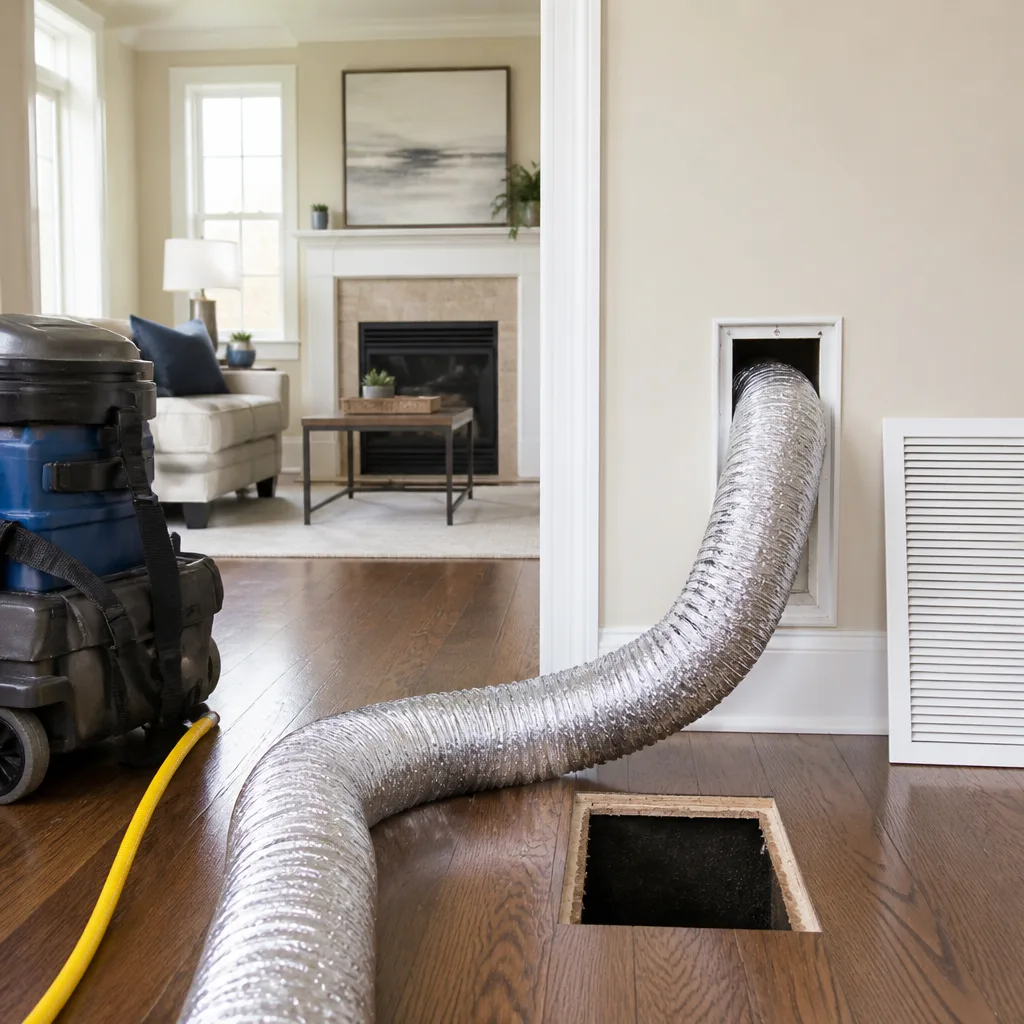 Whole-home duct cleaning
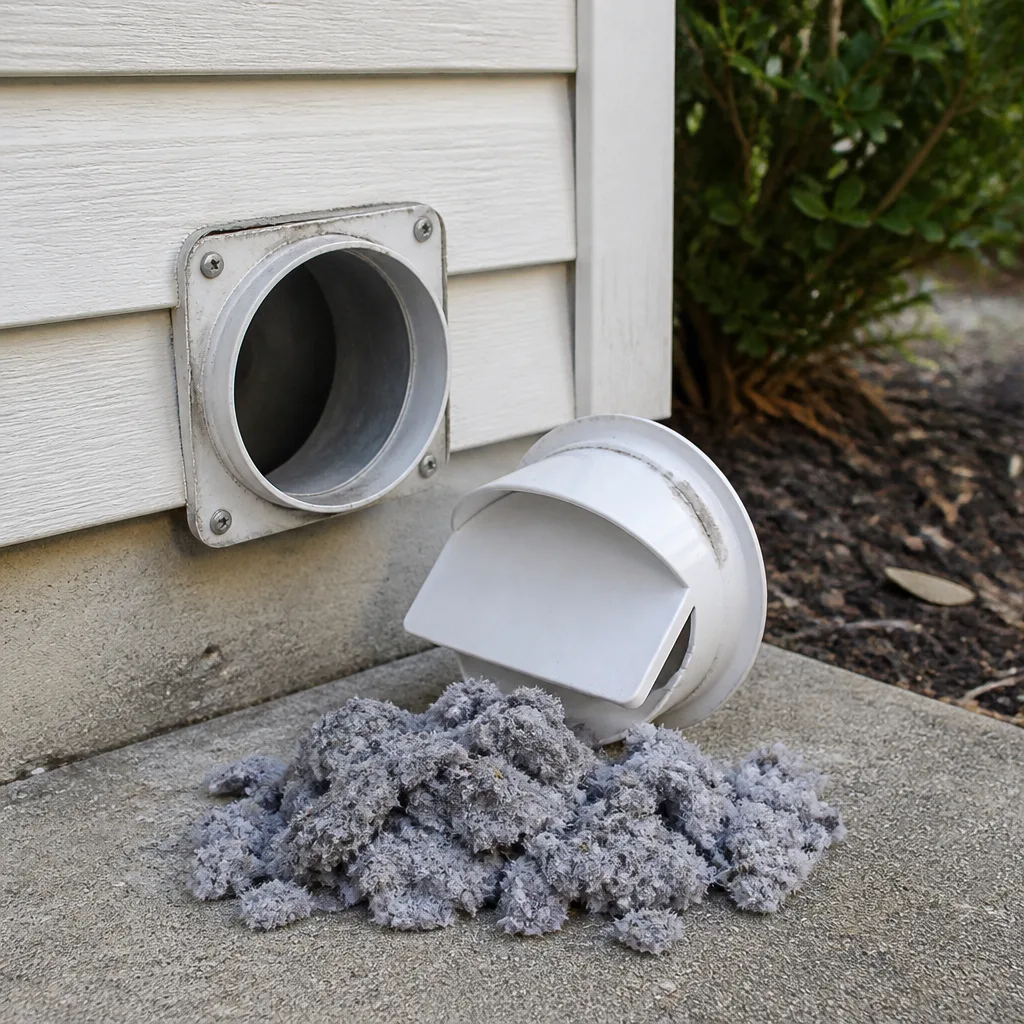 Dryer vent cleaning
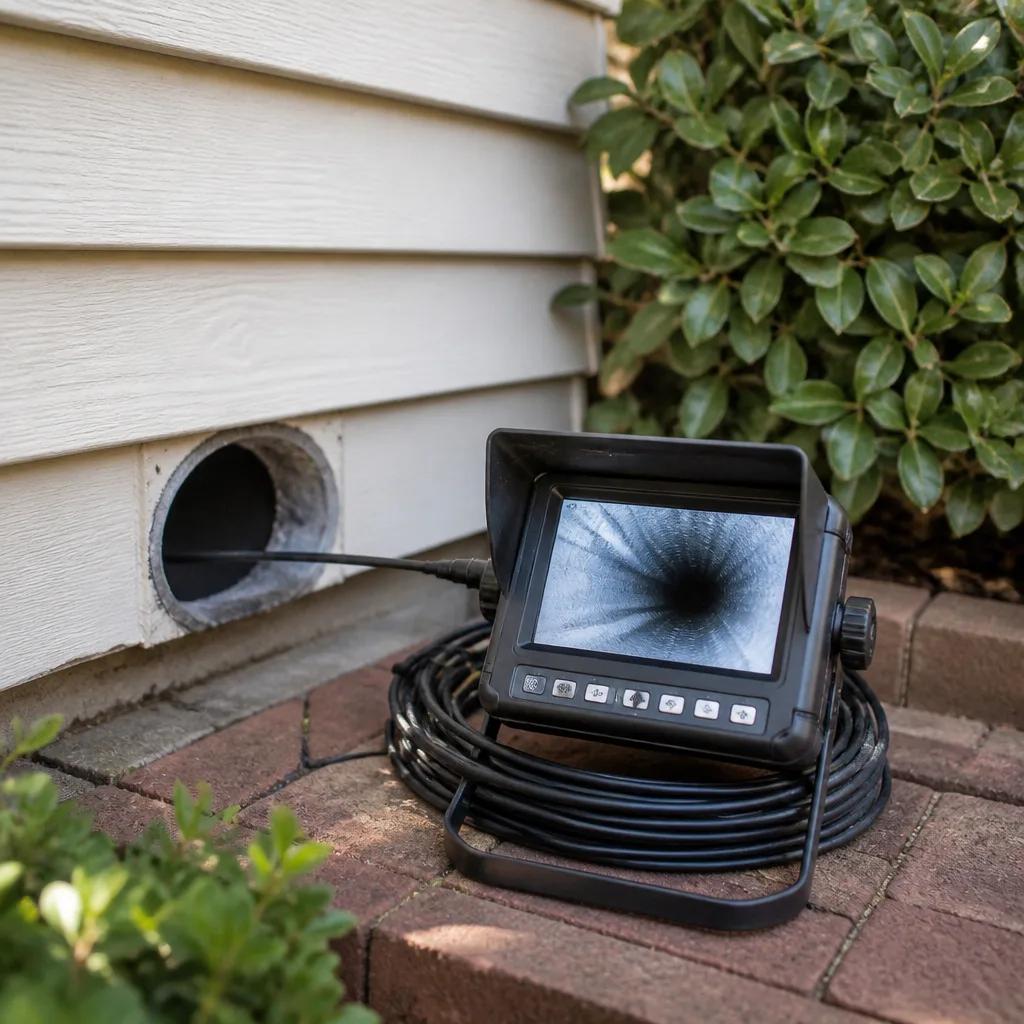 Camera inspection
 Sanitizing & deodorizing
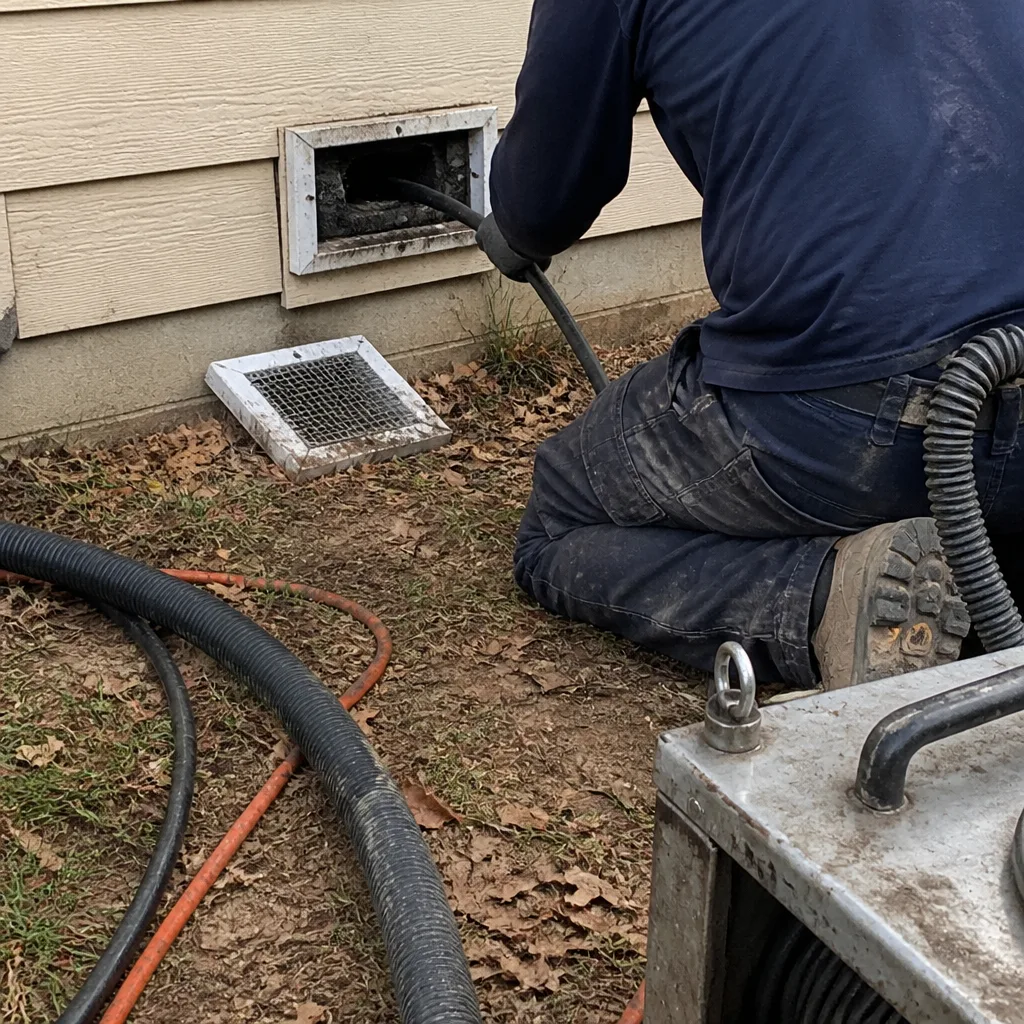
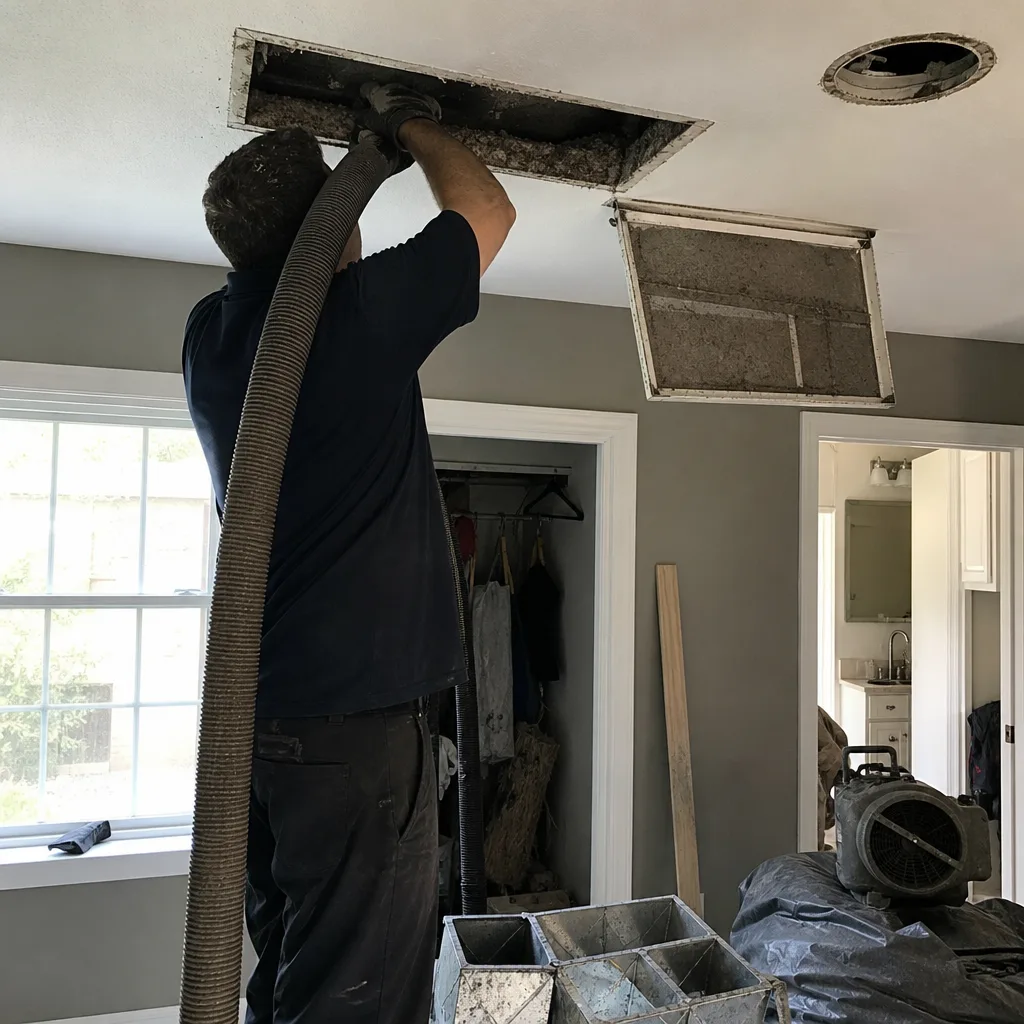
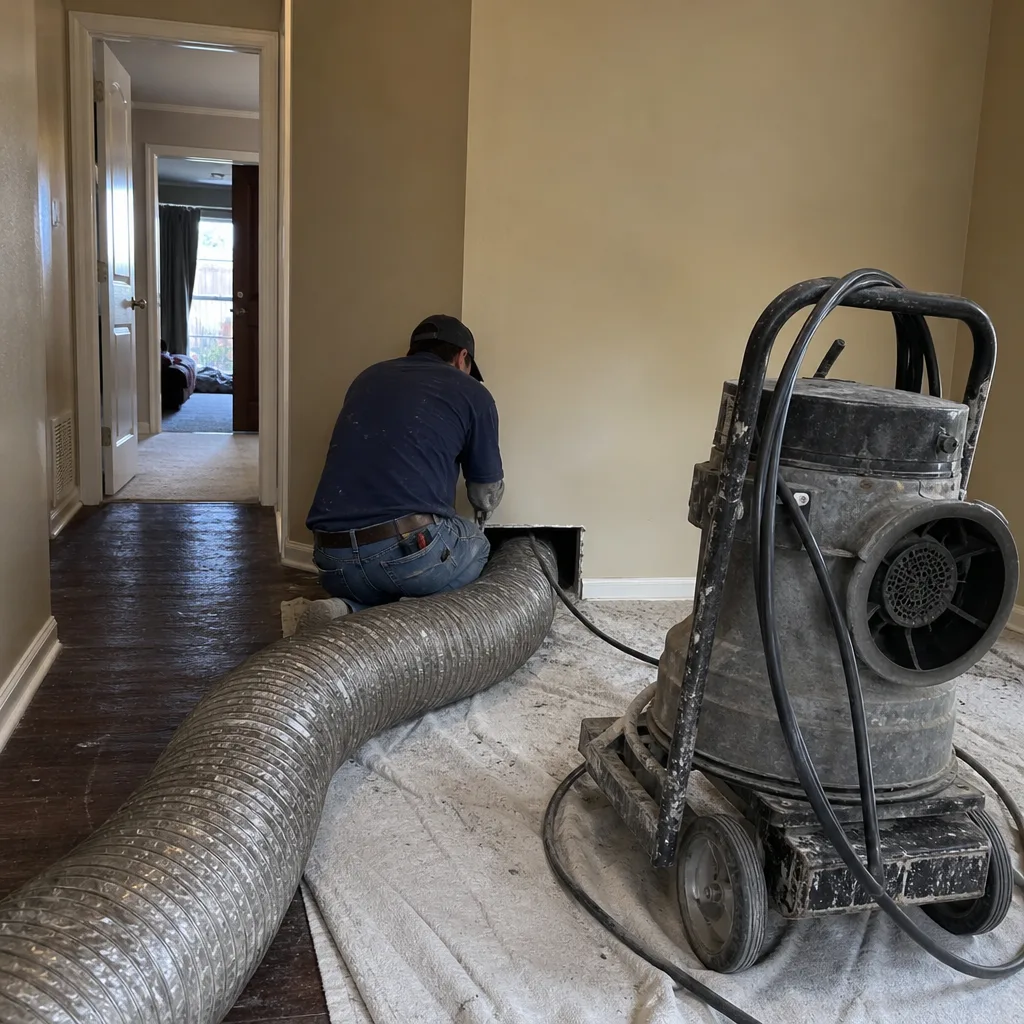
Whole-system duct and dryer vent check with before-and-after photos - you see exactly what came out of your vents
That "$99 whole-house special" is a bait ad - the real number appears once they are in your hallway, or the "clean" is a shop-vac at the register. We photograph the inside of your ducts before and after instead.
Air Duct Cleaning Emergency Preparedness Guide for Tyler Homes
Most homeowners treat duct cleaning as routine maintenance. In Tyler, that assumption breaks down fast. After the February 2021 ice event, Texas HVAC contractors reported a surge in calls from homeowners running systems through ducts that had been exposed to burst pipe water intrusion. Most of them had no idea that turning the system on was making the contamination problem significantly worse. Ice storms, tornadoes, and flooding all leave duct systems in a state that routine cleaning was never designed for, and the window to respond correctly is short. This guide maps the post-emergency duct actions Tyler homeowners should know before disaster strikes, so you’re acting on a plan instead of reacting to a crisis.
Quick Answer
After flood, storm, or freeze damage in Tyler, shut your HVAC system off immediately if water or debris has entered the ductwork, document everything with photos and moisture readings before touching anything, and have the system professionally inspected and cleaned before you run it again. Running a contaminated system spreads mold spores and debris through every room. Professional air duct cleaning and repair after an emergency is a distinct job from routine maintenance and needs to happen before the system goes back into service.
Styles & brands we work with
- Whole-home duct cleaning
- Dryer vent cleaning
- Camera inspection
- Sanitizing & deodorizing
Table of Contents
- Post-Flood and Water Intrusion: The First 72 Hours
- Post-Tornado and High-Wind Events: Attic Breaches and Pressure Differentials
- Ice Storms and Freeze Scenarios Specific to Tyler
- What to Document Before Any Cleaning or Remediation
- How to Vet Emergency Duct Contractors Quickly
- Building Your Duct Emergency Kit Before Storm Season
- When to Call a Professional
Post-Flood and Water Intrusion: The First 72 Hours
Water in a duct system is a clock-started event, not a cleanup project. Between 48 and 72 hours of sustained moisture inside galvanized ductwork or flex duct is enough time for mold to establish itself on the interior surfaces, and once it does, the system is a delivery mechanism for spores every time the blower runs. The number one mistake we see after flooding in Tyler is homeowners turning the system on to “dry things out.” That does the opposite. It pushes moist air through every register in the house and distributes contamination that was previously contained in one section of ductwork.
Here’s the protocol to follow in order:
- Shut the system off at the thermostat and the breaker. Don’t run the fan in “on” mode to circulate air. Turn it fully off.
- Photograph everything before you touch it. Water lines inside the air handler cabinet, saturated insulation, standing water in the plenum, visible debris. You’ll need these for insurance.
- Check for standing water inside the air handler and supply plenum. If the air handler sits on the floor or in a low attic, water may have pooled inside it.
- Do not run the system until it has been professionally inspected. That means opening the air handler, inspecting the interior of the duct runs, and checking for moisture in the insulation.
- Get the ducts cleaned and dried before any repair work. If sections are damaged, they get removed and replaced, but the cleaning comes first so contamination doesn’t get pushed into new material.
Flex duct is usually a total loss after significant water intrusion. The inner liner traps moisture against the wire helix and there’s no way to dry it effectively. Rigid metal ductwork can often be cleaned and dried, but only if professionals get to it inside the 48 to 72 hour window. Anything past that is a judgment call based on what the inspection finds.
Post-Tornado and High-Wind Events: Attic Breaches and Pressure Differentials
Tornadic and high-wind events in East Texas don’t have to put a tree through your roof to damage your duct system. The damage usually happens in ways homeowners don’t see. When a tornado or straight-line wind event passes over a house, it creates a rapid pressure differential between the attic and the interior. Any small breach in the attic envelope, whether it’s a damaged soffit vent, a lifted ridge vent, a compromised gable vent, or a gap where a roof penetration used to be sealed, becomes an intake point. Air rushes into the attic and gets pulled into the return duct system through every gap in the duct connections up there.
What gets pulled in isn’t clean air. It’s attic insulation fibers, dust that’s been sitting on the underside of roof decking for years, biological material, and whatever else the wind picked up on its way through. That debris gets distributed to every room in the house the first time the system runs.
What to check after a high-wind event:
- Soffit and fascia damage. Cracked or missing soffit panels are a direct path into the attic envelope, and from there into the return system.
- Ridge vent and gable vent integrity. Wind events commonly lift or damage these. A quick visual from the ground often reveals it.
- Attic insulation disturbance. If insulation has been blown around or shifted, that’s a strong indicator of pressure intrusion.
- Visible debris inside registers. Remove a supply register grille and look inside the boot with a flashlight. If you see insulation fibers, grit, or material that doesn’t belong, the system has pulled in attic air.
- Return air filter condition. A filter that’s suddenly loaded with gray fibrous material after a wind event is telling you something got in.
If any of those check out, the system needs professional evaluation before you run it. In our experience, the cleaning job after a wind event is often a repair job too, because the duct connections in the attic are where the air was getting in, and those need to be sealed and often refastened after the pressure event. Professional air duct repair is a distinct scope from cleaning, and it’s the reason we treat them as separate services. A clean-only contractor will clean the ducts and leave the leak in place, which means the same contamination comes right back on the next windy day. For more on how professional cleaning works and what it covers, our air duct cleaning page walks through the full process.
Ice Storms and Freeze Scenarios Specific to Tyler
Winters in Tyler are mild, but mild doesn’t mean nothing freezes. The 2021 ice event proved that. What makes ice storms a duct concern in East Texas is that the homes and HVAC systems here were built with the assumption that hard freezes are rare. That means plumbing and condensate lines are often run through unconditioned attics with less protection than they’d have in a colder climate, and when a hard freeze does hit, those lines are the first to fail.
Three specific freeze scenarios put duct systems at risk in Tyler:
- Pipe bursts near the air handler. A supply or drain line running near the air handler cabinet in the attic can burst during a freeze and drop water directly into the air handler or the duct plenum. This is exactly the scenario that drove the post-February-2021 call surge. If you have any pipe near the air handler in the attic, know where its shutoff is and check for it first after a freeze.
- Condensate line freeze. The condensate drain from the air handler can freeze and block. When it thaws and the system runs, water backs up into the air handler cabinet instead of draining. Sometimes this shows up as water stains around the air handler, sometimes as a wet spot on the ceiling below the attic.
- Duct insulation saturation in unconditioned attics. Flex duct running through an attic takes on condensation when the duct surface is cold and the attic air is warm, and during a freeze-thaw recovery the insulation jacket can absorb moisture from a nearby leak or from a burst line. Saturated duct insulation is a mold substrate. It doesn’t dry on its own in an attic; it needs to be inspected and replaced.
After any hard freeze in Tyler, do a walkthrough of the attic if it’s safe to access. Look for wet spots near the air handler, water stains on the decking, ice or water at the base of vertical duct runs, and any visible pipe damage. If you find anything, shut the system off before running it. An ice event doesn’t clean itself up, and running the system after a freeze is the fastest way to turn a small leak into a full duct contamination job.
What to Document Before Any Cleaning or Remediation
Documentation is the part homeowners skip, and it’s the part that costs them on the insurance side. The moment you call a duct contractor, that contractor’s cleaning work becomes the baseline for the “after” condition. If you don’t have a documented “before,” you have no way to prove the extent of the damage to your insurer, and in some cases you have no way to prove what was there to begin with.
Document all of this before the first cleaning pass:
- Wide shots of every affected room. Include the register and the surrounding wall or ceiling so the location is unambiguous.
- Close-ups inside every register boot. Use a flashlight. Get the visible interior of the duct.
- The air handler itself. Interior cabinet, filter, blower wheel, and the supply plenum.
- Moisture readings if you have a meter. Photo the reading against the material it was taken on. If you don’t own a meter, the contractor’s readings should be documented during the inspection.
- Attic photos of the duct runs. Include any damaged or disconnected sections, wet insulation, and the source of the intrusion if visible.
- Written notes on dates and events. When the storm hit, when you noticed the problem, when you shut the system off, and when you called for an inspection.
- A copy of the contractor’s written inspection report and estimate. Keep the original.
Ask any contractor you hire whether they document the before condition and provide photos. Before-and-after photos of a customer’s own ducts are the standard we hold ourselves to, and in an insurance situation they’re not a nice-to-have. They’re the record. If a contractor can’t or won’t document the before condition, that’s a reason to keep looking.
How to Vet Emergency Duct Contractors Quickly
Emergencies create bad hiring decisions. Roof damage, water in the house, a system that’s down, and a line of contractors offering “emergency service” all combine to push homeowners toward whoever shows up first. That’s the pressure window scammers count on, and it’s the reason duct work after storms is one of the more common complaint categories for local consumer protection agencies. You don’t need a long vetting process to avoid it. You need three questions and the discipline to walk away if the answers are wrong.
Ask every contractor these three questions before you let them touch anything:
- “What equipment are you bringing in, and can you name it?” Professional-grade duct cleaning systems have names. Rotobrush and Nikro are the two systems serious duct specialists use. If the answer is “a big vacuum,” that’s a consumer-grade or generic truck-mount setup. A legitimate specialist will tell you exactly what’s coming into your house and why.
- “Do you do repair, or only cleaning?” Post-emergency duct work almost always involves repair, whether it’s sealing disconnected joints, replacing saturated flex runs, or re-securing duct boots after a pressure event. A clean-only contractor will clean and hand you off to a second contractor for the repair, and the second contractor will often find the first contractor’s cleaning didn’t hold because the leak is still there. Ask up front. We built our service around cleaning and repair under one provider because that handoff is where jobs go wrong.
- “Will you give me a written estimate before the work starts, and does it cover the whole system?” A legitimate duct contractor gives you a written estimate for the whole system before any work begins. Per-vent pricing, teaser coupon pricing that turns into a much larger invoice on-site, and verbal estimates with a “we’ll see when we get in there” caveat are the patterns that separate a bait-and-switch operation from a specialist.
One more thing to watch for: any contractor who wants to start work the same hour you call without inspecting the system first. After an emergency, the correct sequence is inspection, then written estimate, then work. Anyone who skips the first two steps is selling you a product, not a service.
Building Your Duct Emergency Kit Before Storm Season
The time to prepare for a duct emergency is before one happens. Most Tyler homeowners are caught flat-footed because they don’t have the basic pieces in place. A little preparation before storm season makes the actual event much less chaotic.
Here’s what to have ready:
- Know your system’s shutoff locations. The thermostat, the breaker, and any inline disconnect at the air handler. Write them down and put the note in a drawer you’ll actually check.
- A moisture meter, or a plan to borrow one. A basic pin-type or pinless meter costs very little and tells you immediately whether a duct run, insulation jacket, or air handler cabinet has absorbed water. This is the single most useful tool in the kit.
- A flashlight and a step ladder. You’ll be looking inside registers and into the attic. A bright light is the difference between seeing the problem and missing it.
- Camera or phone with a good low-light setting. The photos you take in the first hour are the photos your insurer wants.
- A written list of supply registers and their locations. In an emergency, you’ll want to check every one of them. A pre-written list means you don’t miss one.
- A file with your HVAC system’s information. Filter size, air handler model, duct layout if you have it, and the names of the professional duct contractors you’d call.
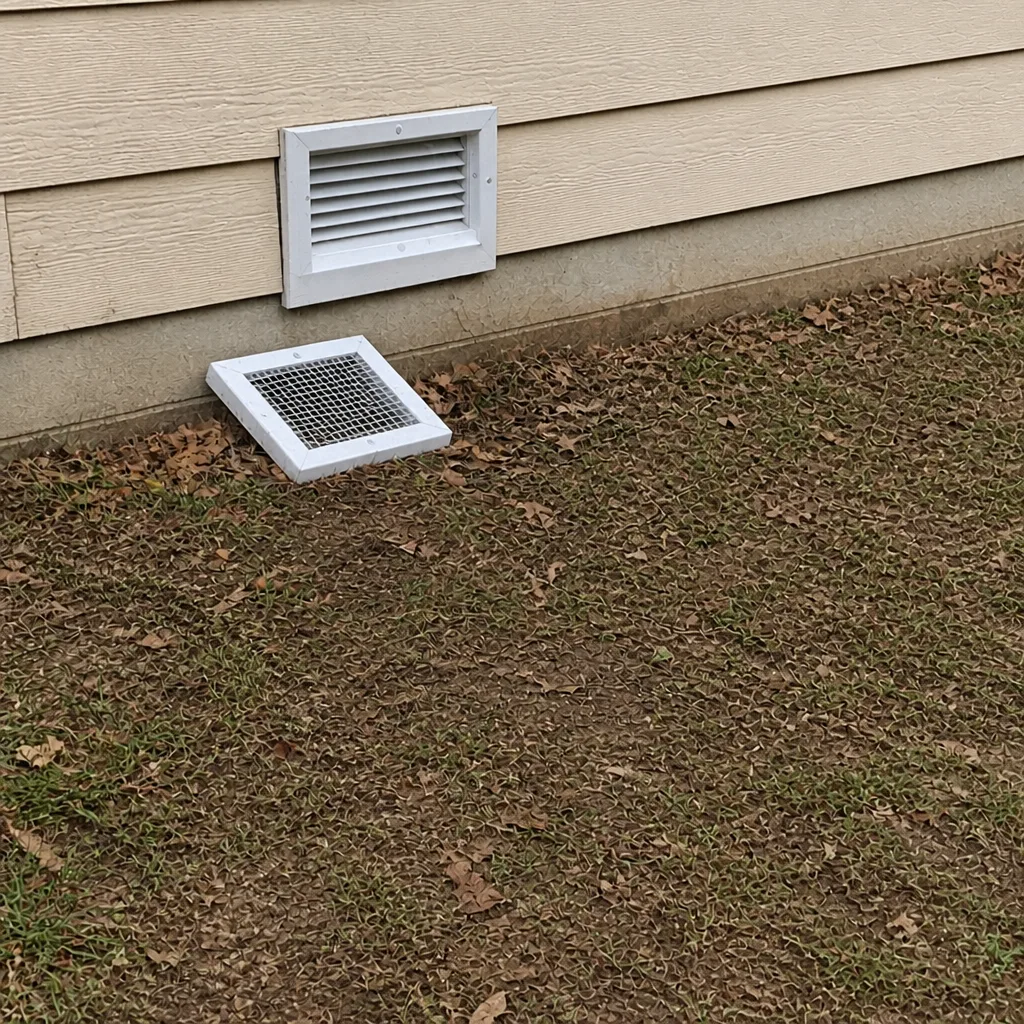
- A plan for the dryer vent. Storm events often leave dryer vent lines packed with debris, and dryer vent cleaning is a fire-safety service, not a maintenance nice-to-have. A vent that’s blocked after a storm is a fire risk every time you run the dryer. If your dryer vent wasn’t already on the post-emergency checklist, add it now. Our dryer vent cleaning page goes into why this matters more than most homeowners realize.
One more piece of preparation: know what your insurance policy says about duct cleaning after a covered event. Some policies cover post-emergency duct work as part of the water damage or storm damage claim, and some don’t. Reading your policy before the event, or calling your agent to ask, saves you the scramble during one. We can work with your insurer on documentation if a claim is involved.
See the difference
 Before
 After
 Before
 After
 Before
 After
Common Mistakes to Avoid
- Running the system to “dry out” the ducts. This is the single worst thing you can do after water intrusion. It distributes mold spores and moisture to every room in the house and turns a contained problem into a whole-home one.
- Waiting to call until you see visible mold. By the time mold is visible at the registers, it’s been growing in the duct system for days. In Tyler’s humidity, the 48 to 72 hour window is real. Call on day one, not day five.
- Hiring the first contractor who shows up with a truck. After a major storm, out-of-area contractors come through offering “emergency duct cleaning.” Some are legitimate, some are not. Ask the three vetting questions before you let anyone start, even if it costs you a day.
- Skipping documentation because you’re overwhelmed. The 30 minutes you spend photographing registers, the air handler, and the attic will be the difference between a smooth insurance claim and a denied one. Do it before the cleanup starts.
- Letting a clean-only contractor handle a job that needs repair. In a post-storm situation, the leak that let contamination in is almost always still there after cleaning. If the contractor doesn’t repair ductwork, the cleaning will not hold. Ask up front.
- Forgetting the dryer vent. Post-storm debris packs many Tyler dryer vents, and a blocked vent is a fire risk. Treat dryer vent cleaning as part of the post-emergency checklist, not a separate conversation to have later.
- Cleaning before the system is dry. Cleaning ducts that still contain moisture pushes contamination into areas that were clean. The correct sequence is inspect, dry what can be dried, replace what can’t, then clean.
When to Call a Professional
Some post-storm duct situations are obviously professional jobs. Water intrusion into the air handler or any duct run, ducts that have pulled in attic air after a wind event, saturated duct insulation, and any situation where the system was run after contamination entered are all cases where you need a professional inspection before anything else happens. The same applies to a dryer vent that’s clearly blocked or packed with debris after a storm, since that’s a safety issue, not a maintenance task.
The subtler cases are the ones where homeowners hesitate. A faint musty smell after a freeze. A register that looks slightly dusty when it didn’t before. A small ceiling stain near the air handler. Those are all worth a call, because they’re almost always the visible surface of a larger problem inside the duct system. An inspection is the cheapest possible step, and it either rules out the problem or gives you a written plan for fixing it. Duct Cleaning Tyler offers free estimates in Tyler, and the written estimate sets the final price before any work starts. Call (877) 610-4987. We answer 24/7. Fast dispatch from 7am to 7pm, Sunday through Friday.
Frequently Asked Questions
The window is 48 to 72 hours. Mold can establish on duct interior surfaces within that timeframe when moisture is present, and after that the cleaning and repair scope grows. If the system was run after the water intrusion, treat the timing as more urgent, not less. Call (877) 610-4987 for an inspection before you run the system again.
Not until it’s been inspected, if the storm involved water intrusion or high wind. Visible water isn’t the only indicator. Debris and attic air pulled in through a soffit breach are invisible from the register, but they contaminate the duct system just the same. If in doubt, shut the system off and have it looked at.
It depends on the policy and the cause of loss. Many policies cover duct cleaning as part of a covered water or storm damage claim, and some exclude it or cap it. Documentation is what determines the outcome. Photograph everything before any cleaning starts, keep the contractor’s written inspection report and estimate, and call your insurer’s claims line to confirm coverage before the work begins. We can work with your insurer on documentation if a claim is in progress.
Because cleaning alone doesn’t address the cause. Storms damage duct connections, disconnect joints, saturate insulation, and compromise the air barrier between the attic and the duct system. If those aren’t repaired, the next wind event puts the contamination right back in. That’s why we offer air duct repair as a distinct service and handle it in the same visit as cleaning when the job calls for it.
Yes, and it’s a fire-safety issue, not a maintenance item. Storm debris can pack into a dryer vent line, and a blocked dryer vent is one of the leading causes of residential house fires. After a storm event, have the dryer vent checked along with the duct system. It’s a separate safety service for a reason.
Professional-grade systems, not consumer vacuums or generic truck-mount rigs. Rotobrush and Nikro are two of the most widely recognized systems in the trade, and a specialist will tell you exactly what’s coming into your house. Familiarity with products like Honeywell and Aprilaire air quality systems also matters, since the post-emergency job often involves checking the whole system rather than just running a brush through it. If a contractor’s answer is vague on equipment, that’s your answer to move on.
The Bottom Line
The post-emergency job on a duct system in Tyler is not routine cleaning. Water intrusion, freeze damage, and wind events put contamination into the ducts in ways that require inspection first, repair where the damage is, and cleaning only after the system is dry. Shut the system off if water or debris got in, document everything before anyone touches it, and vet your contractor on equipment, repair capability, and written pricing before you let them start. Everything in this guide is preparation for a scenario we hope you never face, but if you do, the difference between a contained problem and a whole-home one comes down to the first 72 hours. If you’re in that window now, or you want a professional assessment before storm season, Duct Cleaning Tyler is here for the whole scope: cleaning, dryer vent safety, and repair under one provider. Call (877) 610-4987 for a free estimate. We answer 24/7. Fast dispatch from 7am to 7pm, Sunday through Friday. If you’re comparing services and want to understand what each one covers, our Tyler service page breaks it down by job type. For the full picture of how we approach the work, start at Duct Cleaning Tyler.
Written by the team at Duct Cleaning Tyler.