
Last updated November 15, 2026
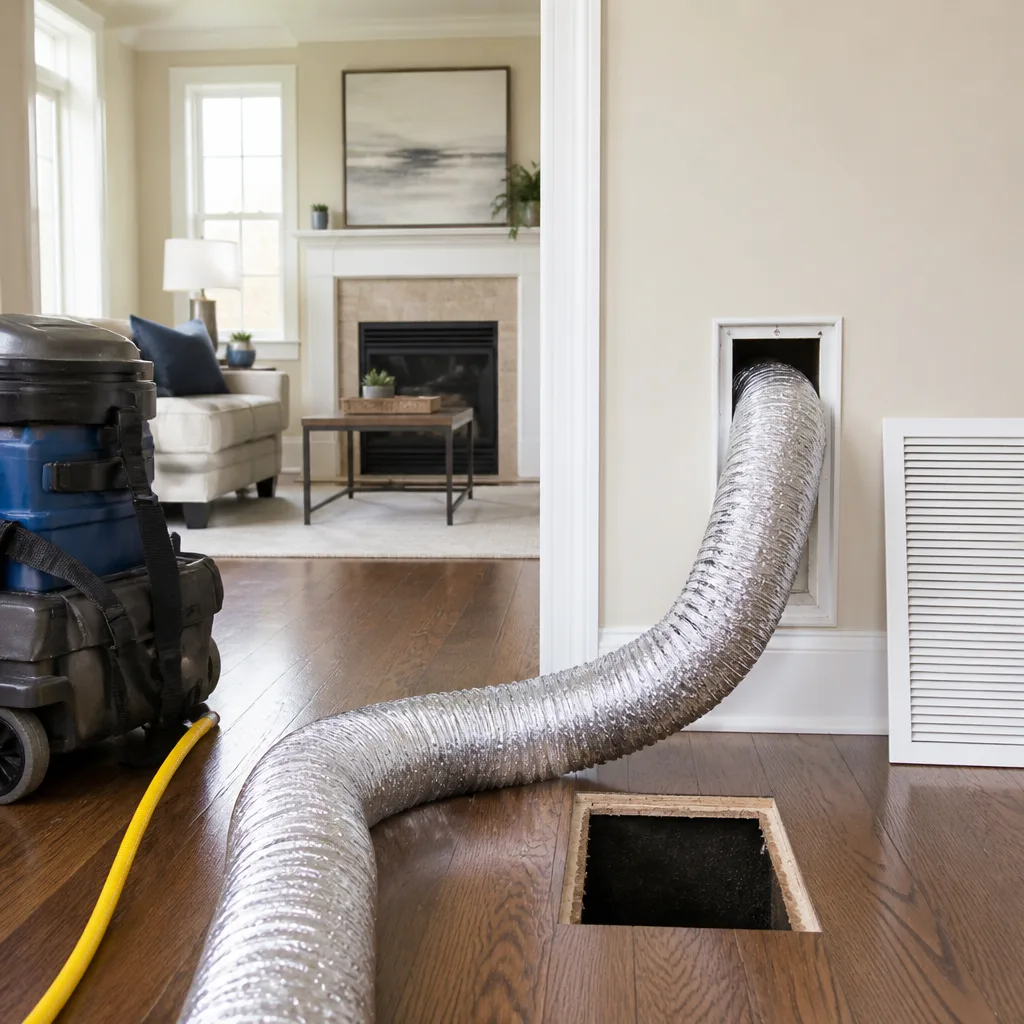 Whole-home duct cleaning
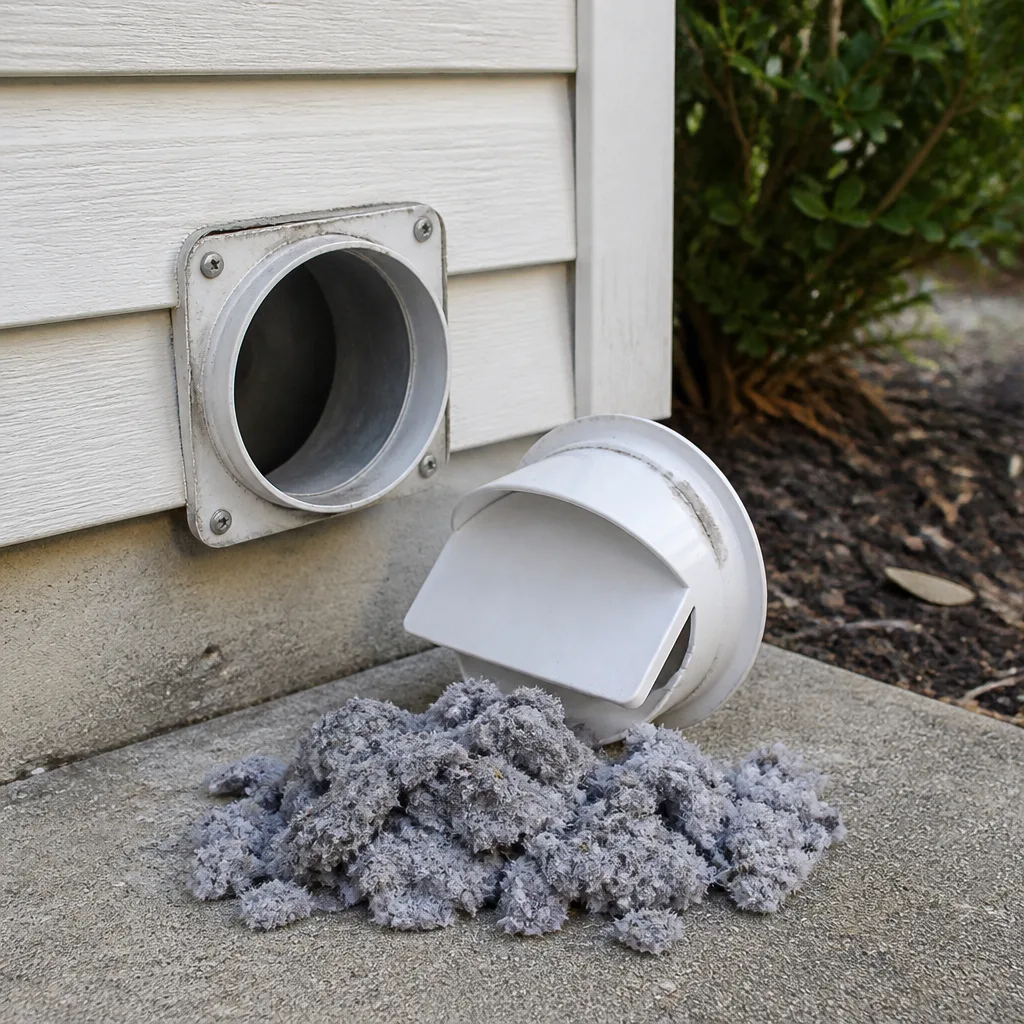 Dryer vent cleaning
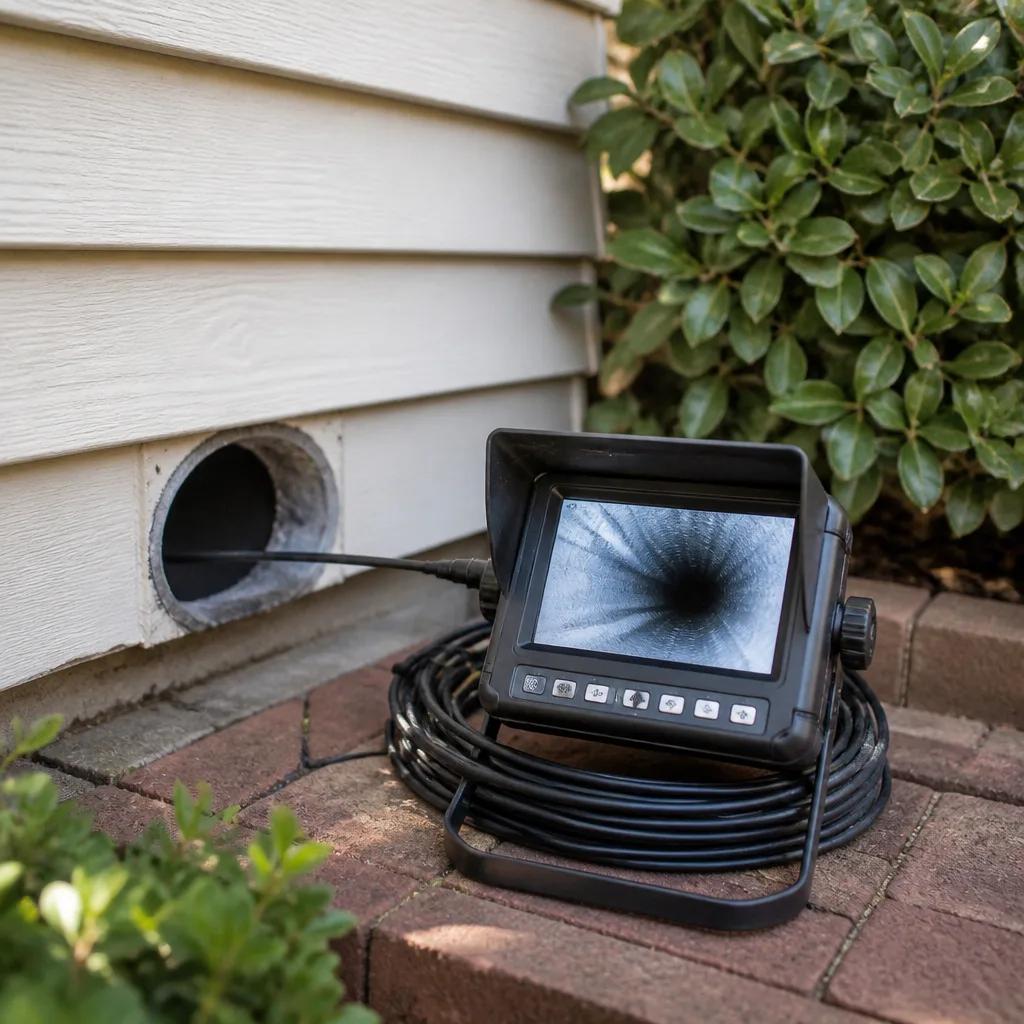 Camera inspection
 Sanitizing & deodorizing
Whole-system duct and dryer vent check with before-and-after photos - you see exactly what came out of your vents
That "$99 whole-house special" is a bait ad - the real number appears once they are in your hallway, or the "clean" is a shop-vac at the register. We photograph the inside of your ducts before and after instead.
Air Duct Cleaning Troubleshooting in Tyler: Common Problems and How to Fix Them
If your ducts were cleaned six months ago and your house still smells musty or rooms still won’t cool evenly, the cleaning wasn’t the problem. Your diagnosis was. Most of what homeowners in Tyler call “dirty ducts” is really a duct system that’s broken, disconnected, or leaking somewhere behind the drywall, and no amount of vacuuming fixes a duct that has come apart at a joint. We’ve seen this pattern repeatedly: someone pays for a second cleaning to solve a problem the first cleaning couldn’t touch, because the real issue was structural. This guide will teach you how to read your system’s symptoms, inspect what you can safely reach, and know when cleaning is the answer versus when repair has to come first.
Quick Answer
Most persistent duct problems in Tyler aren’t dirt problems at all, they’re structural or moisture problems. Uneven airflow, recurring odors, and debris that returns after a cleaning usually point to disconnected flex duct, a leaking return, or a moisture intrusion point rather than a duct system that just needs cleaning again. Diagnose the cause before you book the service, and if you find damaged ductwork, plan for air duct repair alongside the cleaning rather than after it.
Styles & brands we work with
- Whole-home duct cleaning
- Dryer vent cleaning
- Camera inspection
- Sanitizing & deodorizing
Table of Contents
- Symptom-to-Cause Mapping: What Your Ducts Are Telling You
- How to Visually Inspect Your Ducts Before Calling Anyone
- Dirty Ducts vs. Compromised Ducts: Why the Difference Matters
- How Tyler’s Humidity Creates Duct Problems Other Climates Don’t See
- Why a Musty Smell After Cleaning Means Find the Leak, Not Clean Again
- When Repair Has to Come Before Cleaning
- The Dryer Vent Problem That Masquerades as a Duct Problem
- Common Mistakes to Avoid
- When to Call a Professional
- Frequently Asked Questions
Symptom-to-Cause Mapping: What Your Ducts Are Telling You
Every duct complaint is a clue, and different clues point to different root causes. Before you pick up the phone, it helps to know which symptom you actually have, because a technician who arrives knowing the symptom category will diagnose faster and quote more honestly. Here’s how we map the three most common complaints in Tyler homes.
- Uneven airflow (one room cold, one room warm): Usually a duct integrity problem, not a dirt problem. A flex run that has collapsed under attic insulation, a section that got crushed during a remodel, or a supply boot that has separated from the trunk all cut airflow to specific rooms. Cleaning doesn’t restore a crushed duct.
- Musty or stale odor when the system runs: Points to moisture or biological growth somewhere in the system, which almost always traces back to a leak, a condensation issue, or a return that’s pulling air from a damp crawl space. Cleaning a growling wet duct without finding the water source is wasted work.
- Visible debris blowing from registers: This one actually is often a cleaning problem, but don’t assume. Debris can also be blowing out because the return is drawing air from a dirty attic space and pushing it straight through the supply side.
Notice that only one of these three is straightforwardly a cleaning job. The other two are structural or moisture issues. Match your symptom to the right category first, and you’ll avoid paying for a service that can’t solve your problem.
How to Visually Inspect Your Ducts Before Calling Anyone
You don’t need special tools to spot the most common duct failures, just a flashlight and safe access to a few accessible spots. Do this before you call anyone, and you’ll be able to describe the problem accurately. Limit yourself to safe, reachable areas: registers, a basement or utility closet, a garage. Don’t climb into an attic or crawl into tight spaces, and never touch gas lines, electrical work, or the air handler itself.
- Pop off a supply register and shine a flashlight inside. Look for how far you can see clean metal or flex duct, and whether the duct surface is coated in dust, furred with biological growth, or clear. Note the color and texture of what you see.
- Check the boot connection at the ceiling or floor. The boot is the metal fitting behind the register, and it’s where duct sections most often separate. If you can see a gap between the boot and the flex run feeding it, that’s an airflow leak.
- Look at a return grille. Pull the filter if there is one and shine a light up into the return chase. Debris clinging to the sides of the return is normal; a return that’s wide open to a dusty attic or crawl space is not.
- Trace any flex duct you can safely reach. Flex duct should be smooth and round. If it’s flattened, kinked at a tight bend, or hanging loose from a joint, airflow is compromised at that point.
- Look and smell for moisture. Water staining, damp insulation, or a musty odor near the duct are the biggest red flags. Jot down where you see or smell it.
Take a few photos with your phone as you go. When a technician arrives, those photos help them target the right areas first. If you’d rather skip the inspection entirely, that’s fine too, but it’s worth knowing how to look so you can judge whether the diagnosis you’re given is grounded in what’s actually there. Our troubleshooting guides walk through more of these checks if you want to go deeper.
Dirty Ducts vs. Compromised Ducts: Why the Difference Matters
Here’s the distinction that most homeowners never hear, and it’s the reason so many people feel like they’ve been sold the same service twice. A dirty duct is a duct system with an accumulation of dust, debris, and biological growth inside it that a thorough cleaning can remove. A compromised duct is a duct system that has lost its physical integrity somewhere: a joint has separated, a run has collapsed, a return has torn open, or a leak has developed at a seam. These two problems look similar from inside the house, but they need entirely different fixes.
Cleaning a dirty system makes sense because the problem is what’s inside the duct, and cleaning removes it. Cleaning a compromised system accomplishes almost nothing, because the debris will keep accumulating at the leak or separation point, and the real issue, the opening where air escapes or contaminated air enters, is untouched. A homeowner books a cleaning, sees some improvement for a few weeks, sees the same symptoms return, and books another cleaning. That loop is the single most common frustration we hear about in Tyler.
The fix is to diagnose which problem you have before the service is booked. This is why the scope of a duct service matters. A company that only cleans can only offer you a cleaning, however sincerely. A company that cleans and also duct cleaning Tyler repair can lift a register, see a disconnected run, and fix it on the spot, so the cleaning you paid for actually holds. When you’re evaluating providers, ask whether they offer duct repair as a separate named service. If the answer is no, understand that any structural problem they find is going to become your problem to solve with a second contractor.
How Tyler’s Humidity Creates Duct Problems Other Climates Don’t See
Tyler’s climate is warm and humid, and that humidity does specific things to duct systems that a homeowner in a dry climate simply doesn’t deal with. This isn’t about one bad season. It’s a pattern our technicians with up to 14 years of experience see year after year.
The first pattern is condensation inside the duct. When cold air from the air handler moves through a duct in a hot, humid attic or crawl space, the outside of the duct sweats, and if the duct is damaged or underinsulated, the sweating happens inside where the condensate can pool. That standing moisture becomes a substrate for biological growth. In a dry climate, that same duct might just collect dust and never become moist. In Tyler, dust plus steady humidity is a different problem.
- Flex duct sweating in the attic: Common in Tyler homes with attic-routed duct runs. Poorly sealed or underinsulated flex duct is a moisture magnet, and a sweating duct is already failing even if the air still flows.
- Returns drawing from damp crawl spaces: Many older Tyler homes pull return air from a crawl space or an unconditioned area, and a return leak in that environment pulls humid air straight into the system.
- Biological growth in the air handler closet: The coil area and the plenum behind it collect moisture in a humid climate, and that growth can spread down the ducts if the plenum is contaminated.
- Musty smell after heavy rain: When a musty odor gets worse after wet weather, that’s an intrusion point showing itself. It’s a leak in the building envelope, not a dirty duct.
Because Tyler humidity is a persistent condition rather than a one-off event, moisture issues in ductwork tend to get worse rather than resolve on their own. That’s why we treat moisture diagnosis as part of any thorough evaluation, not something to look at only if the customer mentions a smell.
Why a Musty Smell After Cleaning Means Find the Leak, Not Clean Again
If you had your ducts cleaned and the musty smell came back or never left, the cleaning didn’t fail, the diagnosis did. A musty odor that persists after cleaning is a signal that there’s an active moisture intrusion point somewhere in the system, and cleaning a wet or biologically contaminated duct without sealing the source gives you a clean duct that grows back. That’s not a cleaning deficiency; it’s a physical fact.
Think about what cleaning actually does. It removes accumulated material from the inside surfaces of the duct. It doesn’t fix a leak, it doesn’t stop condensation, and it doesn’t address an unconditioned return that’s pulling in humid air. If the source of the moisture is still there, the growth comes back.
- Identify every possible water or humidity entry point. That means checking returns that draw from crawl spaces, any duct in a humid attic, and the air handler closet for dampness.
- Find and confirm the leak. Trace the odor to its strongest source. Sometimes it’s a specific register; sometimes it’s the return plenum. Locating it precisely saves time.
- Seal the intrusion point before or alongside any further cleaning. A gap in the building envelope, a disconnected duct joint, or an open return needs to be closed so the humidity can’t keep getting in.
- Only then do a full cleaning. Once the moisture source is controlled, the system can be cleaned once, properly, and stay clean.
This is the sequence that matters: find, seal, clean. Doing it in any other order wastes the cleaning. If a provider offers you another cleaning before diagnosing the moisture source, that’s your cue to ask harder questions.
When Repair Has to Come Before Cleaning
Some duct problems are so severe that cleaning before repair is genuinely the wrong call, and doing it anyway wastes the homeowner’s money. A technician who knows ductwork will tell you when repair has to come first. Here’s how to recognize those cases.
- Collapsed or crushed flex duct: A section that’s been flattened reduces airflow to near zero, and cleaning can’t restore its shape. The run needs to be replaced.
- Disconnected trunk lines or separated boots: If air is dumping into an attic or crawl space instead of the living area, cleaning the living-area ducts doesn’t help until everything is reconnected.
- Torn or unsealed return: A return that’s drawing air from a contaminated space is actively spreading debris through the system. It needs to be sealed before you clean.
- Significant biological growth linked to an unrepaired moisture source: The growth will return if the water source isn’t addressed, so repair the source first.
- Duct runs that have lost their vapor barrier or insulation: In Tyler’s humidity, condensation will keep producing moisture regardless of cleaning, so the run needs to be re-insulated or replaced.
When repair comes first, that’s not a bad outcome. It’s the right sequence. A cleaning service that also offers repair can do both in the same visit, which means the diagnostic and the fix happen together instead of becoming two separate contractor relationships. That’s the single biggest reason we offer cleaning and repair as one service scope. It’s the difference between a cleaning that’s finished and a cleaning that’s just been done.
The Dryer Vent Problem That Masquerades as a Duct Problem
Not every venting problem in a Tyler home is an air duct problem. Dryer vents are a separate system, and a clogged dryer vent creates symptoms that resemble a duct issue: heat and humidity in the laundry area, a dryer that takes two cycles to dry a load, and an unmistakable safety risk. We treat dryer vent cleaning as a dedicated safety service rather than an upsell, because a lint-choked dryer vent is one of the leading causes of residential house fires.
Why does this matter in this troubleshooting guide? Because when a homeowner calls us with “my ducts are probably clogged,” sometimes the actual problem is the dryer vent. The two systems are physically separate, but their failure symptoms overlap. A dryer vent that’s blocked shows up as poor dryer performance, a hot laundry room, or a dryer that’s cycling off on a high-limit switch. If those are your symptoms, a duct cleaning won’t fix it. Dryer vent cleaning will.
We’re also familiar with the air-quality systems running alongside these duct systems in Tyler homes, including Honeywell and Aprilaire equipment installed in many residential setups. When we evaluate a duct system, we’re also keeping an eye on whether the air quality equipment attached to it is functioning correctly. A duct system can be perfectly clean and still underperform if the equipment tied into it isn’t working. Our dryer vent service page covers the full scope of what that safety inspection involves.
Common Mistakes to Avoid
- Booking a second cleaning before diagnosing why the first one didn’t work. If the symptoms returned after a previous cleaning, the cause was almost certainly structural or moisture-related, and a second cleaning of a compromised system will produce the same result. Diagnose first, then clean.
- Assuming all duct problems look alike from inside the house. Uneven airflow, musty odor, and visible debris each point to a different root cause. Treating them as one problem is how homeowners end up paying twice.
- Cleaning a duct with an active moisture source. In Tyler’s humid climate, biological growth tied to a leak will regrow after any cleaning. The moisture source has to be found and sealed before cleaning will hold.
- Hiring a clean-only contractor when you have a structural problem. A cleaner can’t fix a collapsed run or a disconnected boot, so you’ll end up sourcing a second contractor. Ask whether duct repair is a named service before you book.
- Overlooking the dryer vent. If your dryer is slow, the laundry room is hot, or the vent is clearly clogged, that’s a safety issue separate from your duct system. Don’t let a duct cleaning schedule push the dryer vent down the list.
- Trying to fix duct problems yourself inside an attic or crawl space. Attic and crawl space access is a genuine safety risk, and the air handler, gas components, and electrical connections around it should only be handled by trained technicians.
When to Call a Professional
Call a professional duct technician when any of these holds: your symptoms returned after a previous cleaning, you’ve found water staining or a musty smell near a duct, you can see a disconnected or crushed duct run, or your dryer is consistently underperforming with no other apparent cause. These are the moments when diagnosis, not just cleaning, is the job.
A trained technician can look inside and around the system safely, including areas you shouldn’t access, and tell you which problem you actually have. Duct Cleaning Tyler offers free estimates in Tyler, and our technicians use professional-grade equipment such as Rotobrush and Nikro systems, along with familiarity with Honeywell and Aprilaire air quality products common in residential HVAC installs. Call (877) 610-4987 to set up an evaluation. We answer 24/7, and fast dispatch runs from 7am to 7pm, Sunday through Friday.
See the difference
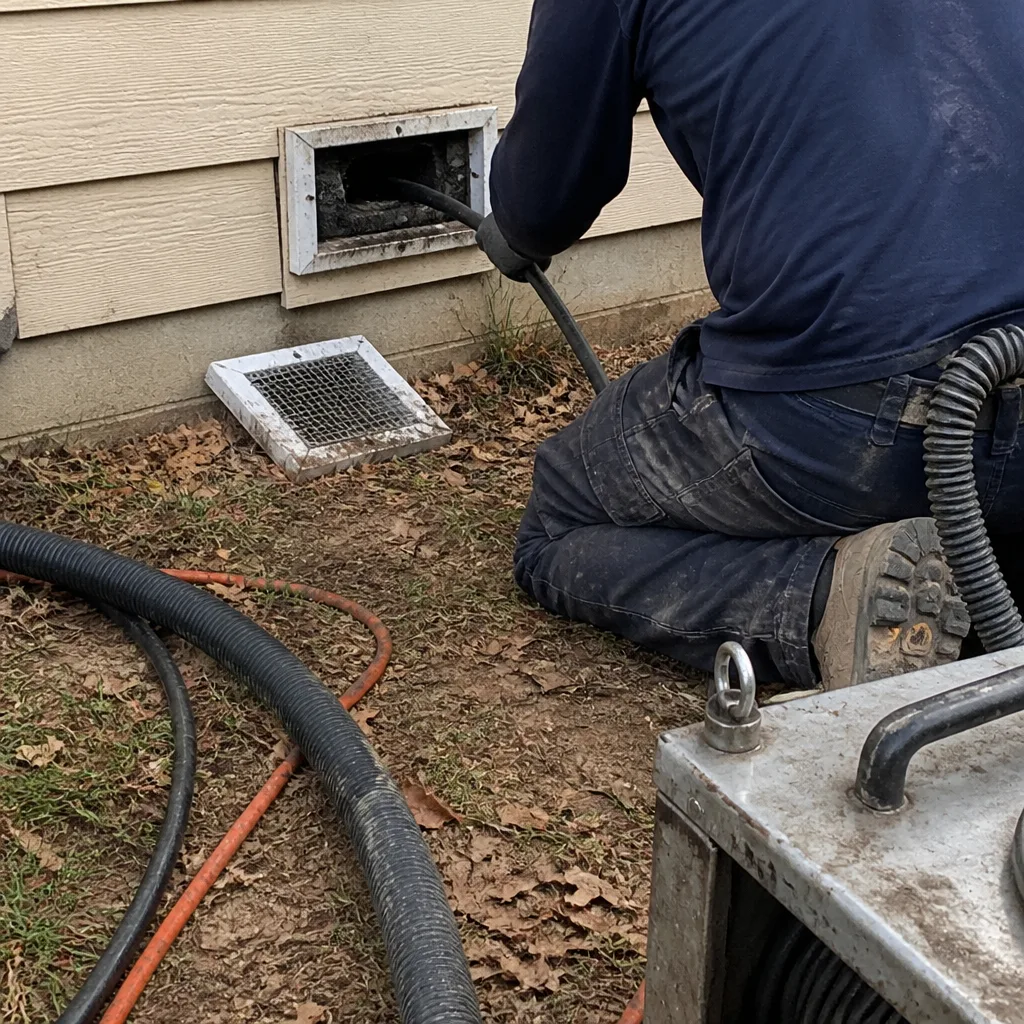 Before
 After
 Before
 After
 Before
 After
Frequently Asked Questions
Whole-system duct cleaning in Tyler typically runs in the low-to-mid hundreds of dollars per system, and we quote a flat price for the whole system after the estimate rather than pricing per vent. Prices depend on the number of registers, system size, and whether any repair work is needed alongside the cleaning. The final price is set by the written estimate, not by a phone call. Call (877) 610-4987 for an exact quote. Estimates are free.
Cheap quotes usually reflect a different scope, not a better deal. A low advertised figure often covers a quick pass over the accessible registers rather than a full system cleaning, and it almost never includes an inspection of the system for structural problems. When a clean-only provider finds a disconnected duct or a collapsed run, they can’t fix it, so you pay again for a second contractor. Ask what the quote actually covers, and whether repair is included in the scope. Call (877) 610-4987 for a written estimate that states the full scope.
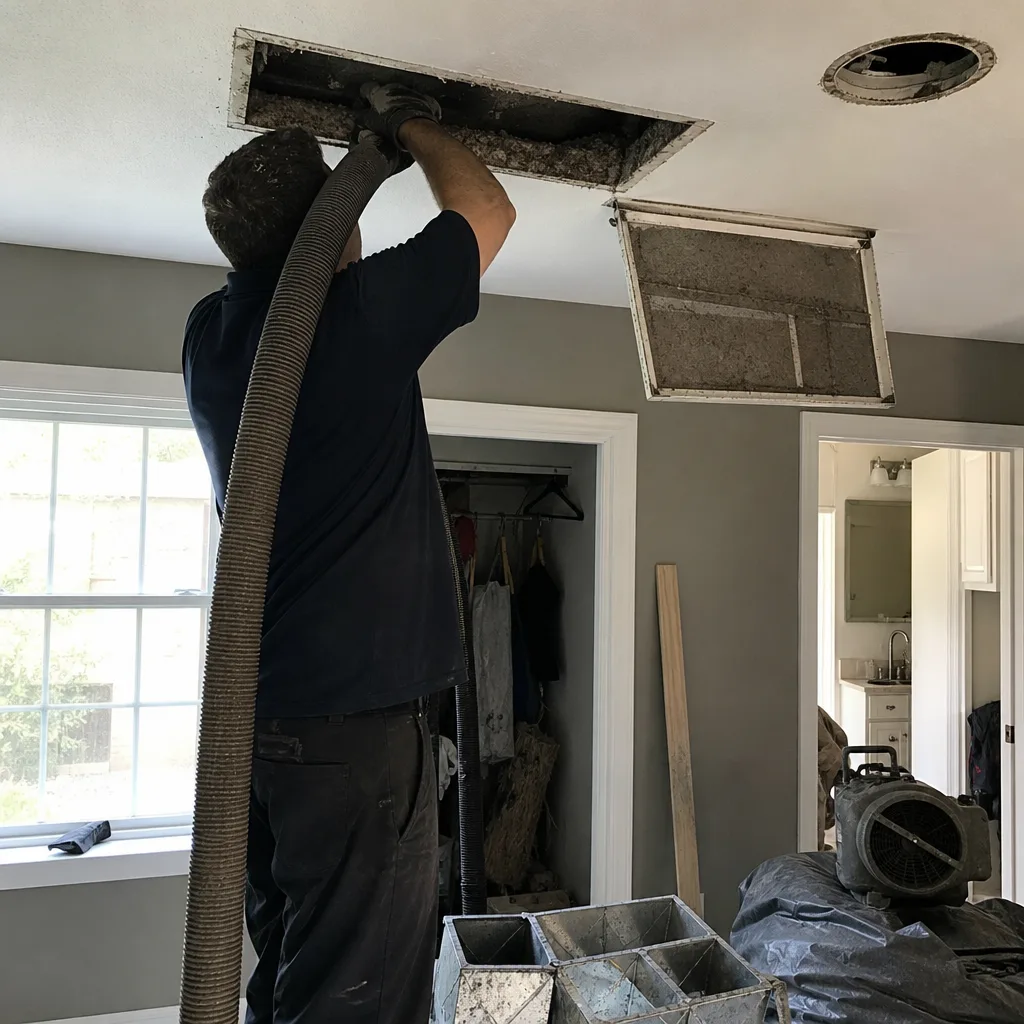
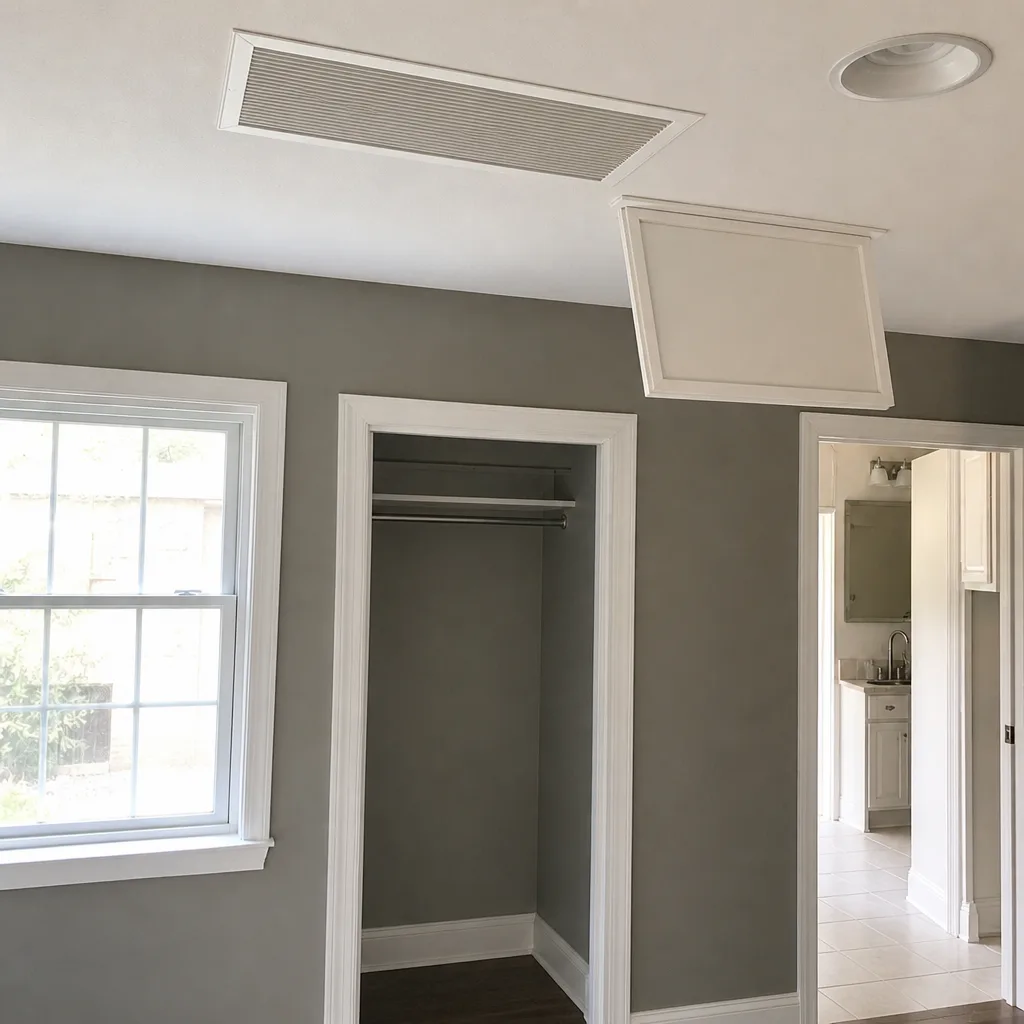
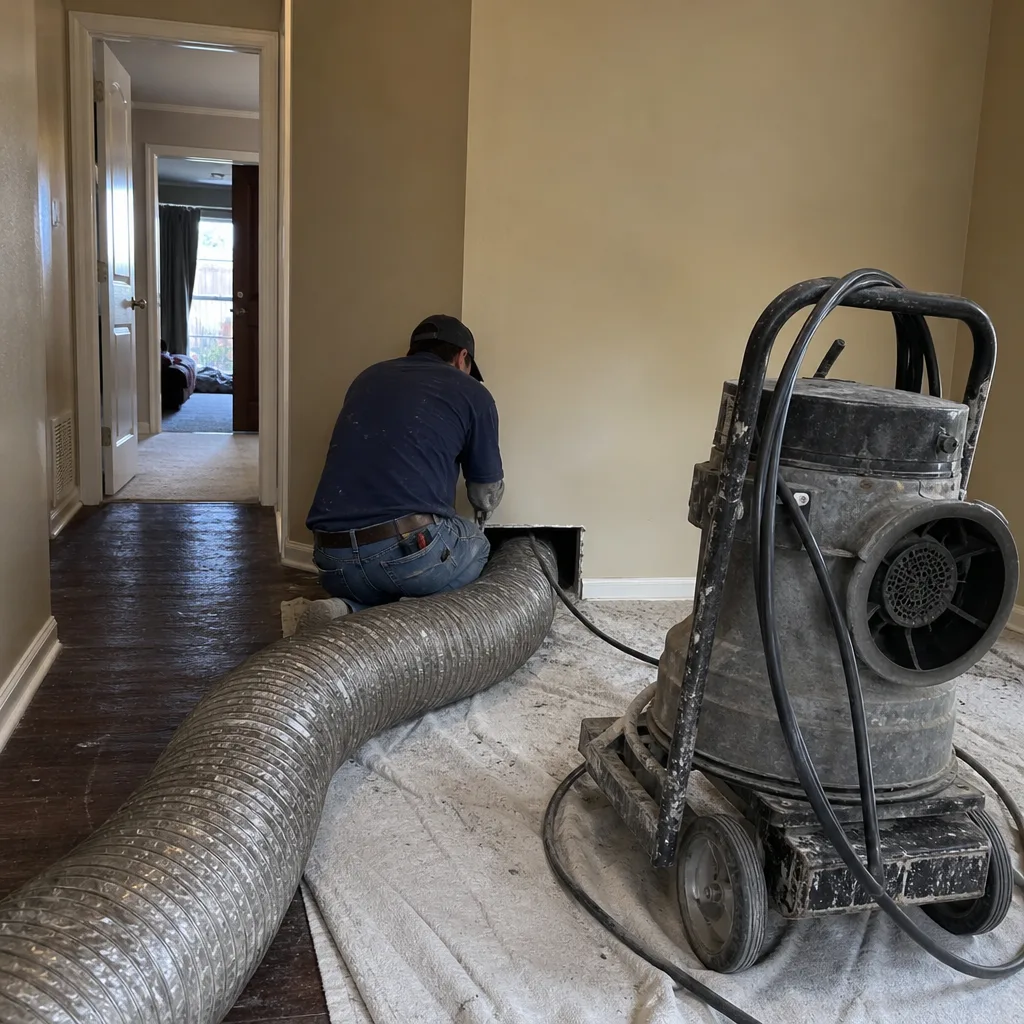
Ask for before-and-after photos of your own ducts taken during the service. Any provider using professional-grade equipment like a Rotobrush or Nikro system can capture these images from inside the system, and you should see clear evidence of what was there before and what was removed. A provider who can’t show you photos of your system should not be doing the work. Call (877) 610-4987 to book a service with documented results.
There’s no universal schedule, and anyone who tells you it’s always every year or always every five years is guessing. What matters more is whether your system is clean and intact. In Tyler’s humid climate, homes with moisture issues or a compromised duct system tend to need attention more often than a well-sealed, dry system. The right answer is to have the system evaluated and let the actual condition drive the decision. Call (877) 610-4987 for a free assessment.
Cleaning alone fixes a musty smell only if the moisture source that caused it is already gone. If the smell persists after cleaning, there’s an active leak, condensation point, or humid return that has to be found and sealed first. In Tyler’s climate, this is the single most common reason cleaning seems to “not work.” Call (877) 610-4987 if your musty smell came back after cleaning.
We fix it as part of the same service scope. Air duct repair is one of our three core services alongside cleaning and dryer vent cleaning, so a technician who finds a disconnected boot, crushed run, or leaking return can repair it rather than ending the visit with a diagnosis you have to hand to another contractor. That’s a real difference from a clean-only provider. Call (877) 610-4987 to schedule a combined evaluation.
The Bottom Line
Most of the air duct cleaning “problems” homeowners in Tyler try to fix with a second cleaning are really structural issues: collapsed flex duct, disconnected trunk lines, leaking returns, or moisture intrusion that no amount of vacuuming can solve. The symptoms tell you which one you have. Uneven airflow points to a structural problem, a musty odor points to moisture, and visible debris is sometimes the only straightforward cleaning issue. Diagnose first, repair what needs repairing, and clean only when the system is solid enough for the cleaning to hold. If you’re unsure which problem you’re looking at, an evaluation answers that before you spend a dollar on the wrong service.
Call (877) 610-4987 for a free estimate. We answer 24/7, and fast dispatch runs from 7am to 7pm, Sunday through Friday. We’ll find the real cause before quoting the work.
Written by the team at Duct Cleaning Tyler.