
Last updated November 15, 2026
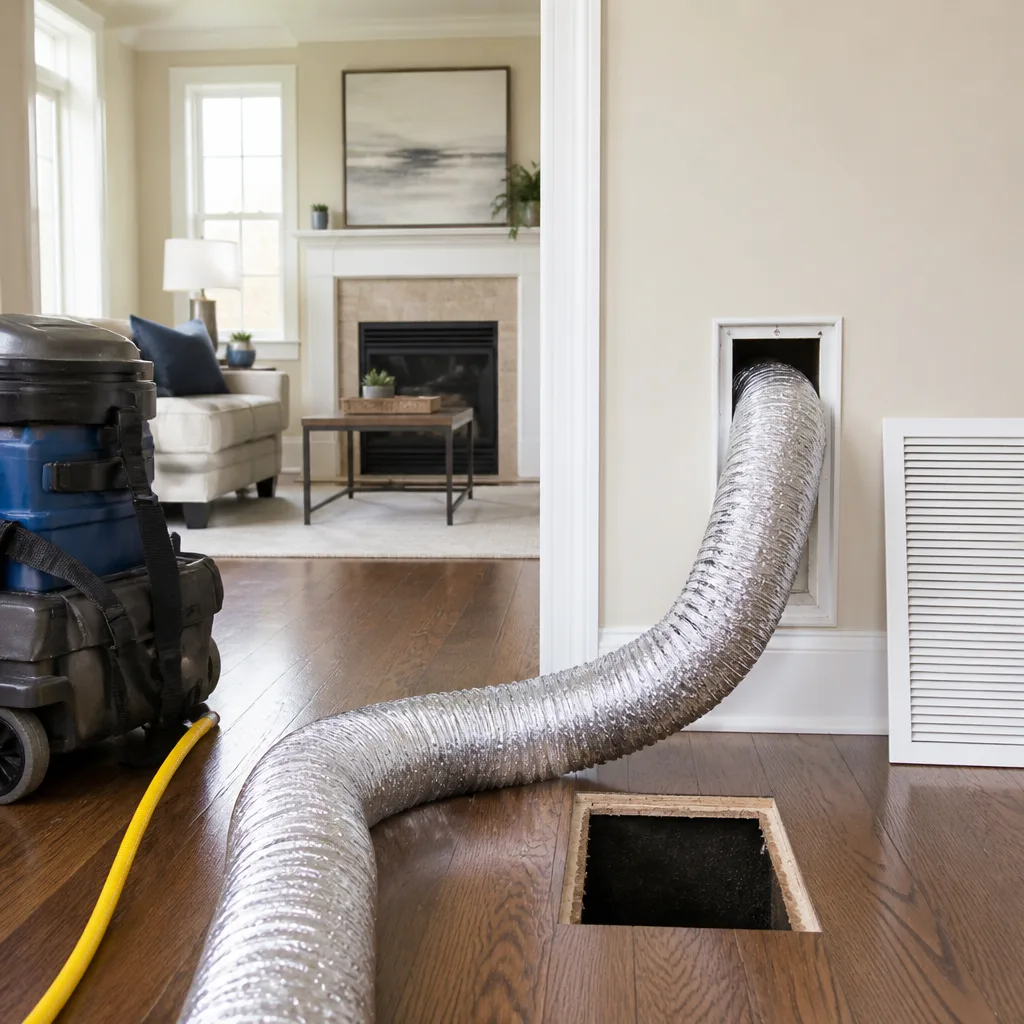 Whole-home duct cleaning
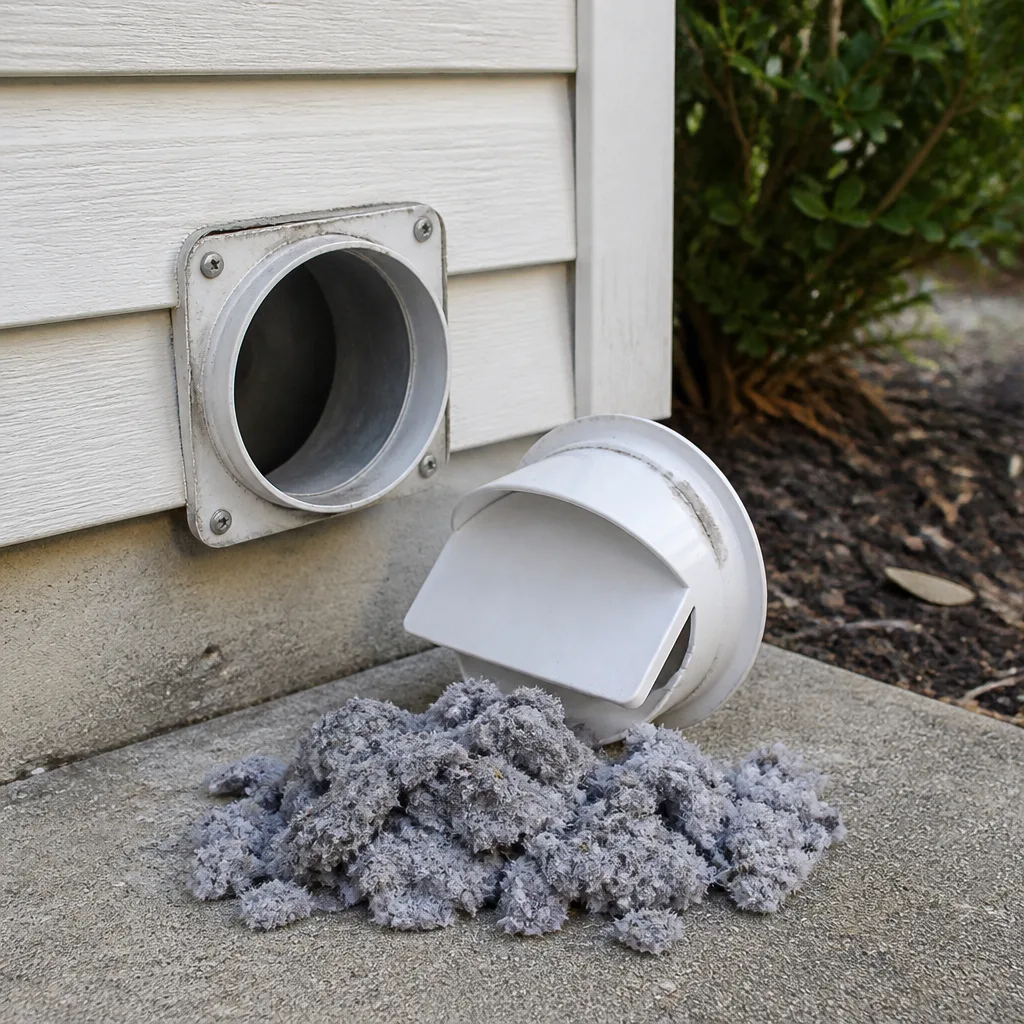 Dryer vent cleaning
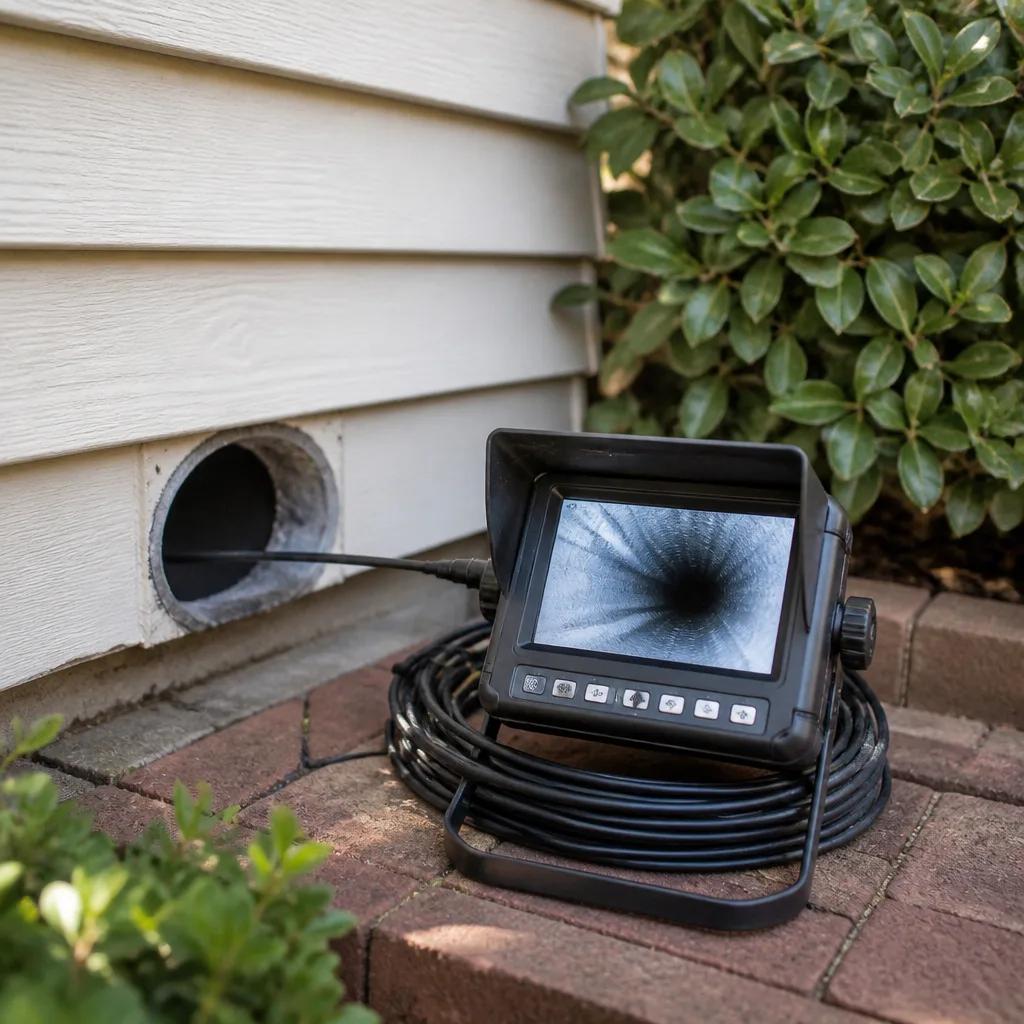 Camera inspection
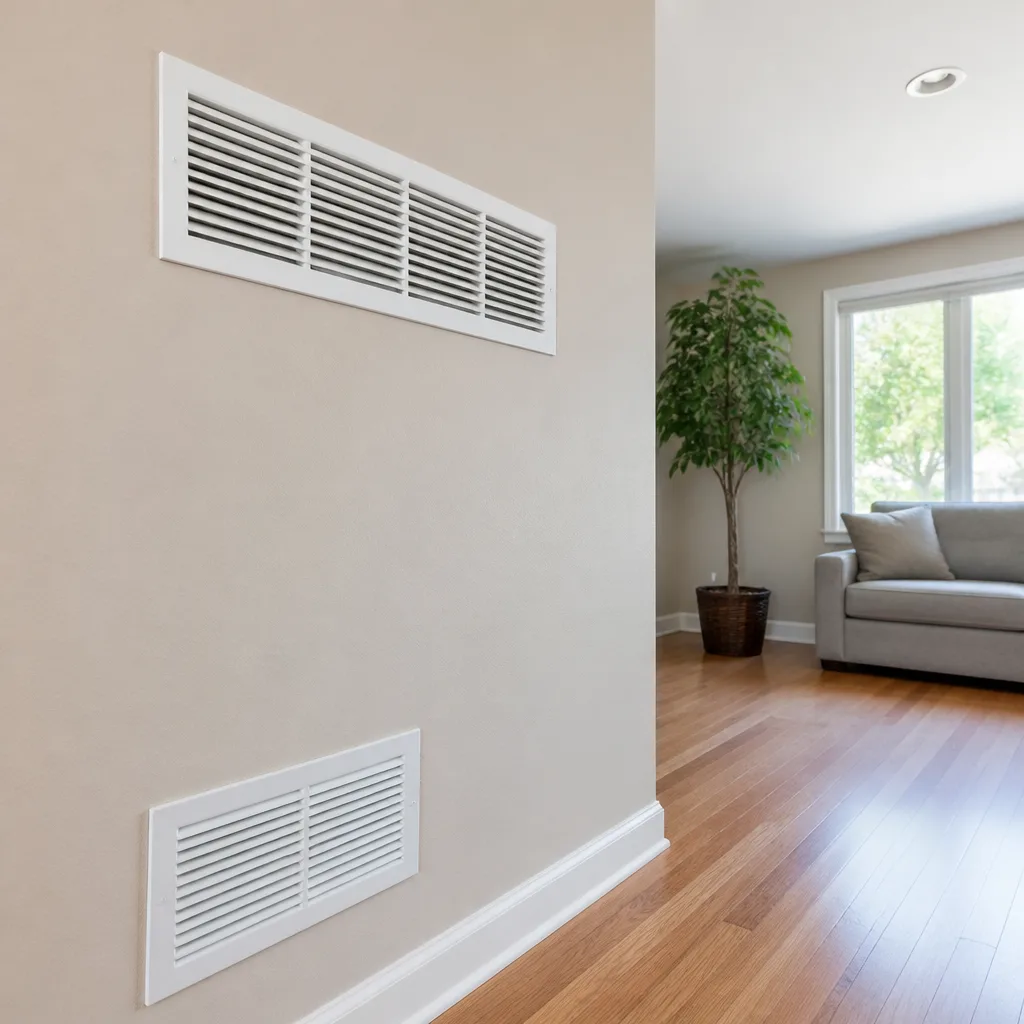 Sanitizing & deodorizing
Whole-system duct and dryer vent check with before-and-after photos - you see exactly what came out of your vents
That "$99 whole-house special" is a bait ad - the real number appears once they are in your hallway, or the "clean" is a shop-vac at the register. We photograph the inside of your ducts before and after instead.
The Complete Guide to Air Duct Cleaning in Tyler
Most homeowners assume duct cleaning is a once-a-decade chore, something you schedule after a remodel or when the vents start whistling. In Tyler, that assumption falls apart fast. Our long cooling season means your HVAC system runs hard for most of the year, pulling humid, pollen-heavy East Texas air through ductwork that may not have been checked since the house was built. The result is a duct system that accumulates dust, pollen, and moisture-driven growth on a schedule that has little in common with what national advice describes. This guide walks through what actually happens inside Tyler ductwork, what real source-removal cleaning looks like, how to spot the shortcuts, and why cleaning without checking duct integrity is only half a job.
Quick Answer
Air duct cleaning in Tyler is the process of mechanically removing accumulated dust, pollen, and biological growth from the entire duct system, including the return side, using professional-grade equipment and verifying the result with before-and-after documentation. It’s not a quick blow-through of the supply registers. A legitimate job includes a camera scope and static pressure check before any equipment runs, source removal with tools like Rotobrush or Nikro systems, and a repair assessment for gaps, disconnections, or collapsed flex duct found during the work.
If you suspect your ducts are contributing to allergy symptoms, uneven room temperatures, or visible dust at the registers, cleaning is worth investigating. Call (877) 610-4987 for a free estimate. We answer 24/7, and fast dispatch runs from 7am to 7pm, Sunday through Friday.
Styles & brands we work with
- Whole-home duct cleaning
- Dryer vent cleaning
- Camera inspection
- Sanitizing & deodorizing
Table of Contents
- Why Tyler Duct Systems Get Dirty Faster Than the National Average
- How East Texas Humidity Creates Conditions for Growth Inside Ductwork
- Source Removal vs. Blow-and-Go: What Actually Works
- What a Legitimate Inspection Looks Like Before Cleaning Begins
- Why Cleaning Without Checking Duct Integrity Is Only Half the Job
- Air Duct Repair: The Service Most Cleaners Can’t Offer
- Dryer Vent Cleaning as a Fire-Safety Service, Not an Upsell
- Red Flags to Watch for in Tyler-Area Duct Cleaning Bids
Why Tyler Duct Systems Get Dirty Faster Than the National Average
Tyler averages over 230 cooling days per year. That’s 230 days your HVAC system is pulling humid, pollen-heavy East Texas air through ducts that most homeowners haven’t touched in years. Compare that with a northern climate where the air conditioner runs for maybe 90 days, and the math gets uncomfortable quickly.
Every time the blower kicks on, it moves several hundred to a couple thousand cubic feet of air per minute through the supply and return trunks. That air carries whatever is suspended in it: pollen from East Texas pines and oaks, red clay dust from unpaved shoulders and construction sites, fine fiberglass particles from attic insulation, and the ordinary shed skin cells and pet dander that accumulate in any occupied home. The filter catches some of it. A surprising amount stays behind.
Here’s what most people don’t realize: the filter only protects the equipment downstream of it. The return ductwork ahead of the filter is fully exposed to unfiltered household air every time the system runs. That return plenum and the return trunks feeding it collect debris year after year, and most cleaning bids skip the return side entirely.
We’ve scoped returns in Tyler homes where the buildup inside the plenum was dense enough to visibly restrict airflow. That restriction shows up on an energy bill as longer runtimes and on a thermostat as rooms that never quite reach their setpoint.
- Cooling days: over 230 per year, meaning continuous airflow through the ducts.
- Pollen load: heavy seasonal pine and oak pollen that penetrates return-side ductwork.
- Red clay dust: fine particulate that settles inside horizontal duct runs.
- Humidity: high year-round relative humidity that supports biological growth on dust deposits.
This is why duct cleaning in Tyler is a different job than the same service in a drier climate. The frequency of cleaning needs to reflect the environment the system operates in, not a generic “every 3 to 5 years” rule.
How East Texas Humidity Creates Conditions for Growth Inside Ductwork
One of the most common questions we hear is whether ducts can grow mold without a visible leak. The honest answer is yes, and Tyler’s climate is why.
Mold needs three things to establish on a surface: moisture, a food source, and temperatures in a workable range. Duct interiors have all three most of the year. Dust and organic debris provide the food. The system’s own operation supplies the temperature, since cooling coils sit right in the airstream. And moisture comes from something Tyler homeowners don’t often think about: the humidity in the air being pulled in from outside and routed through the return side before it gets conditioned.
During the cooling season, air conditioning coils remove moisture from the air as a byproduct of cooling, and that water drips into a condensate pan. That’s the normal path. But if the pan doesn’t drain cleanly, or if the coil stays wet between cycles, moisture lingers inside the air handler cabinet. Duct liner or flex duct with minor surface dust deposits sitting downstream of that can sustain growth even without a puddle anywhere.
What makes this risky is that the growth is invisible until you scope it. Musty odors at the supply registers, a slight worsening of allergy symptoms indoors, or unexplained dust at vent grilles are the common tells. None of those prove a problem. But without a camera inspection, none of them rule it out either.
This is also why a real cleaning isn’t just removal of visible debris. Sanitizing the duct interior after source removal, and addressing the moisture source if we find one, is part of restoring the system rather than just shining it up. Our technicians have up to 14 years of experience working with systems using Honeywell and Aprilaire components, and we know where moisture problems tend to hide in those assemblies.
Source Removal vs. Blow-and-Go: What Actually Works
The single biggest difference between a real duct cleaning and a wasted invoice is the method. Source removal means physically dislodging and extracting the contamination from the duct surfaces. Blow-and-go means running a high-pressure air whip through the ducts and hoping everything ends up somewhere else, which usually means it ends up in your living room.
Here’s how a proper source removal job actually proceeds:
- Containment and HEPA vacuum connection: a negative-pressure setup with HEPA filtration is attached to the system so dislodged debris is captured instead of aerosolized into the home. Abatement Technologies equipment is standard for this step because the filtration ratings matter.
- Register and boot cleaning: each supply register and the boot behind it are removed or opened and cleaned individually. Skip this step and the rest of the job is decorative.
- Source agitation inside the ducts: rotating brush heads on a flexible drive, run through each trunk and branch, mechanically scrape the surfaces. Rotobrush and Nikro systems are the tools we run because the brush heads and vacuum capacity are designed for full-length trunk runs, not just the first few feet past a register.
- Return-side cleaning: the return trunks and plenum get the same treatment. This is the step that gets skipped most often in low-priced bids, and it’s where the heaviest buildup usually sits.
- Air handler and coil inspection: the cabinet gets vacuumed and the evaporator coil is assessed for cleaning needs.
- Post-clean documentation: before-and-after photos and video from the same access points, so you can actually see the difference.
Blow-and-go looks similar from the outside because both involve a truck, a hose, and vents being removed. The difference shows up in the air quality afterward and in what the before-and-after photos reveal. If a technician can’t show you what the ducts looked like inside before cleaning, the cleaning may not have happened at all. Our crews hand over photos of the ducts they actually cleaned, not generic stock images.
What a Legitimate Inspection Looks Like Before Cleaning Begins
A duct cleaning that starts with a hose is a red flag. Any technician who knows the system well will inspect first, and the inspection should include three specific things.
Camera scoping. A flexible camera run into the main trunk and at least a couple of branch runs shows the interior condition directly. Buildup thickness, moisture, liner delamination, and disconnected sections all show up on the scope. This is how a technician decides whether the job needs standard cleaning or something more involved.
Static pressure check. Static pressure measured at the air handler tells you whether the duct system is under stress. High static pressure usually means the system is fighting restriction somewhere, either buildup, a design flaw, or crushed flex duct in the attic. It also gives a baseline for verifying the cleaned system actually breathes better.
Visual access points. The tech will open plenums, register boots, and attic access to flex duct runs. Tape seams, mastic joints, and connections need to be visible to judge whether the ductwork is intact.
In Tyler, this inspection is especially important because of the way many homes in the area are built. Attic duct runs see significant temperature swings, and flex duct in an unconditioned attic can develop sagging sections, loose connections, or tears where it crosses framing. Camera scoping finds these before the brush does.
The inspection should take real time. If a technician quotes a price before looking inside the system, they’re guessing. Our estimates are based on what we find, and the estimate is free.
Why Cleaning Without Checking Duct Integrity Is Only Half the Job
You can thoroughly clean a duct system and still have the same air quality problems a week later if the ducts are leaking. That’s not a hypothetical. It’s one of the most common reasons cleaning alone doesn’t solve the customer’s complaint.
Gaps at seams, disconnected flex duct in the attic, and collapsed sections from age or pest activity all allow unfiltered attic air, insulation fibers, and outside particulate into the system downstream of the filter. Cleaning removes what’s there today. Left unrepaired, those gaps reintroduce the same contaminants within weeks.
What to have a technician check after cleaning:
- Joints and seams: taped or mastic connections that have come loose over time.
- Flex duct runs: sagging, crushed, torn, or disconnected lengths, especially in the attic.
- Plenum connections: the seal where supply and return trunks connect to the air handler.
- Register boots: gaps between the boot and the drywall, which are common leak points in Tyler homes.
- Collapsed sections: duct runs that have lost their shape and are restricting airflow.
This is the reason we treat Air Duct Repair as a named service rather than an add-on. When we find a problem during cleaning, we fix it on the spot instead of handing the customer a list of things they need to track down another contractor to handle. That single-visit capability is what makes our three-service scope meaningful.
Air Duct Repair: The Service Most Cleaners Can’t Offer
Most companies that clean ducts only clean ducts. If they find damage, they can’t fix it, so their incentive is to either pretend they didn’t see it or refer the work out. In the middle of a cleaning job, that gap in capability is expensive for the homeowner.
Air duct repair addresses what cleaning alone can’t: the physical integrity of the duct system. Repairs we handle as part of a cleaning include:
- Sealing disconnected joints: mastic or approved tape at seams and boot connections.
- Replacing torn or crushed flex duct: cutting out the failed run and installing a new section sized to the original airflow design.
- Rerouting sagging runs: correcting flex duct that has slipped off hangers and is pinched against framing.
- Reconnecting plenum-to-trunk joints: resealing the transition where the largest leaks hide.
- Addressing improperly sized branch runs: where ductwork has been altered over time and no longer matches the register demand.
The advantage of doing repair in the same visit as cleaning is that the technician is scoping the system anyway. They know exactly where the weak points are, they have the equipment in place, and the customer isn’t facing a second appointment to solve a problem that was identified on the first one.
On the equipment side, we work with Guardsman products for system protection during cleaning, and we’re familiar with the Honeywell and Aprilaire air quality components that show up in most Tyler residential HVAC installations. That familiarity matters when a repair needs to interact with a whole-home humidifier or a bypass filtration system.
Dryer Vent Cleaning as a Fire-Safety Service, Not an Upsell
Lint accumulation in dryer vents is a leading cause of residential house fires, and it deserves more attention than the “add-on for $49” pitch it usually gets. We treat dryer vent cleaning as a standalone safety service, and we schedule it on its own or alongside air duct cleaning, not as a triage item to tack onto an invoice.
The reason it matters is that lint buildup restricts airflow, and a restricted dryer vent causes the dryer to overheat. Dryers are one of the few appliances in a home that generate sustained heat near a combustible material (lint) inside a concealed chase. A vent run that’s clogged, kinked, or has come disconnected inside the wall is a real hazard, and it doesn’t announce itself until something goes wrong.
What a proper dryer vent service covers:
- Full-length duct clearing from the dryer connection to the exterior termination point.
- Verification that the run hasn’t disconnected inside the wall cavity.
- Checking the exterior damper opens fully and hasn’t been blocked or screened over.
- Confirming the run isn’t exceeding recommended length or has an excessive number of elbows.
Common signs that it’s time: clothes take longer than one cycle to dry, the dryer feels hot to the touch on the outside of the cabinet, the exterior vent flap doesn’t open while the dryer is running, or you can smell warm lint at the laundry area.
We see plenty of Tyler homes where the dryer vent terminates under a porch ceiling or against a low clearance gap that nobody has accessed in years. That’s how a vent run stays clogged for a decade without anyone noticing.
Red Flags to Watch for in Tyler-Area Duct Cleaning Bids
Duct cleaning has a reputation problem, and the reputation is earned. The industry has a long history of bait-and-switch pricing, where a low advertised rate turns into a much larger invoice once a technician is committed. Here’s how to protect against it.
Low flat-rate pricing with no scope defined. A price quoted over the phone before anyone has seen the system is not a price, it’s a hook. A real estimate requires a look inside the ducts and the return plenum, and it should be in writing with a defined scope.
No equipment brand disclosure. Ask what system the company runs. Rotobrush and Nikro are professional-grade. Consumer vacuums and generic “truck-mount rigs” without named equipment are a sign the company doesn’t want you to know what’s being used. If they won’t say, that tells you something.
Skipping the return side. Ask directly: “Does the price include cleaning the return plenum and return trunks?” Many low bids don’t. The return side is often the dirtiest part of the system, and skipping it means you’ve paid for a partial job.
No before-and-after documentation. You should receive photos and, ideally, video of the same access points before and after cleaning. Without that, you have no way to verify the work happened.
Per-vent pricing. A per-vent price incentivizes counting vents up rather than actually cleaning the system. We price per job by written estimate, always agreed before any work begins.
No repair capability. If the company can only clean, they’ll either ignore damage or kick it to a second contractor. That’s a sign they aren’t set up to do the full job.
Pricing that only makes sense as a foot-in-the-door. If the quoted price seems meaningfully lower than every competitor’s, assume it’s covering a fraction of the work. The full-scope price is what matters.
Common Mistakes to Avoid
- Accepting a flat-rate price over the phone without an inspection. Tyler duct systems vary widely by age, attic configuration, and prior work, so no one can price the job accurately without looking inside. A written estimate after an inspection is the only price worth trusting.
- Believing the filter protects the whole system. It only protects the equipment. The return-side ductwork ahead of the filter is unfiltered and collects the worst of the buildup, so a bid that skips the return side is a bid for maybe half the job.
- Choosing the lowest bid without understanding the scope. In a market where blow-and-go operators undercut legitimate businesses, the low bid usually wins on price and loses on results. Ask what method is used, what equipment brand, and whether return-side cleaning is included.
- Ignoring the dryer vent because the dryer still works. A dryer that takes two cycles to finish a load is a warning, not a quirk. Lint buildup is a fire hazard and doesn’t correct itself.
- Cleaning without addressing duct damage. Gaps and disconnected flex duct reintroduce contaminants within weeks. Cleaning without repair is a temporary fix for a permanent problem.
- Assuming musty smells mean mold remediation. Sometimes it’s duct contamination that cleaning resolves. Sometimes it’s moisture that needs a source fix. The only way to know is a camera inspection.
- Trusting national “every 3 to 5 years” advice in Tyler. That rule of thumb was written for average climates. Tyler’s cooling season and pollen load push cleaning frequency faster than the national norm.
See the difference
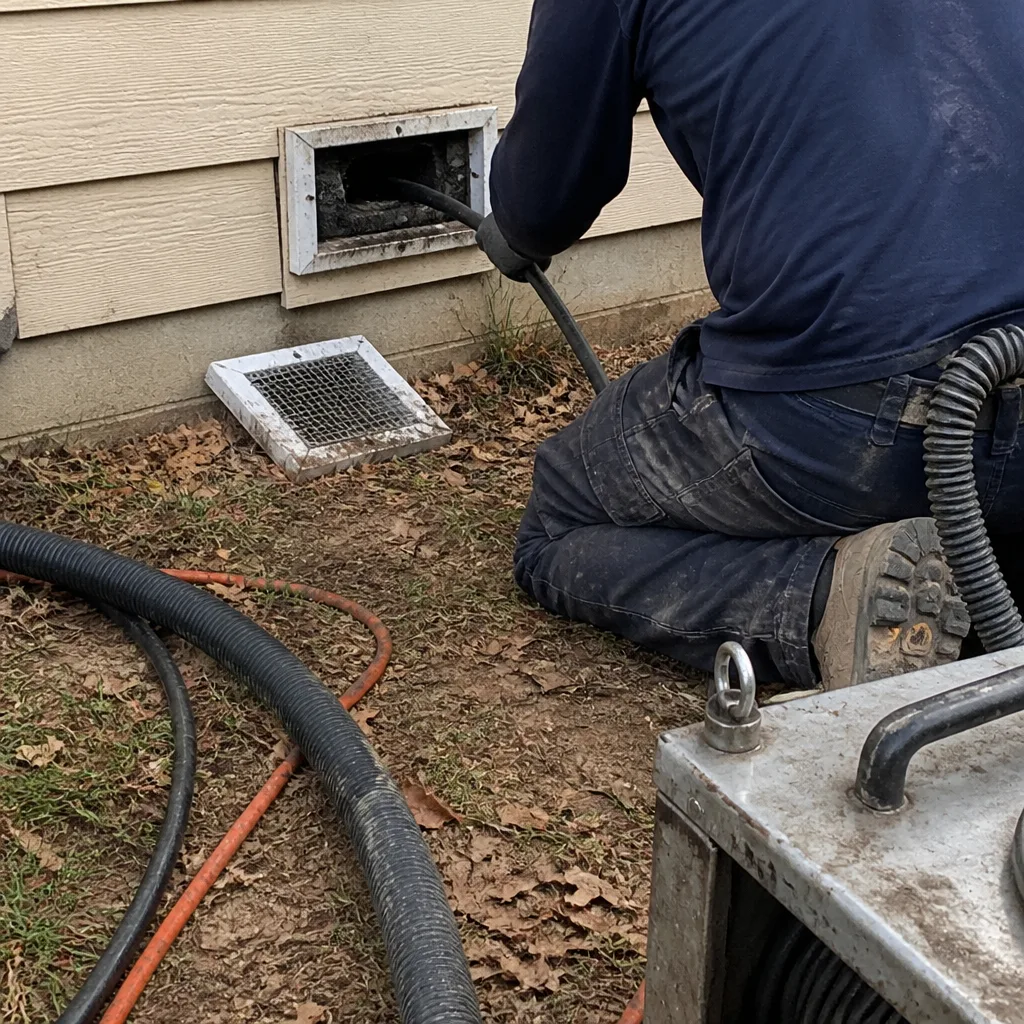 Before
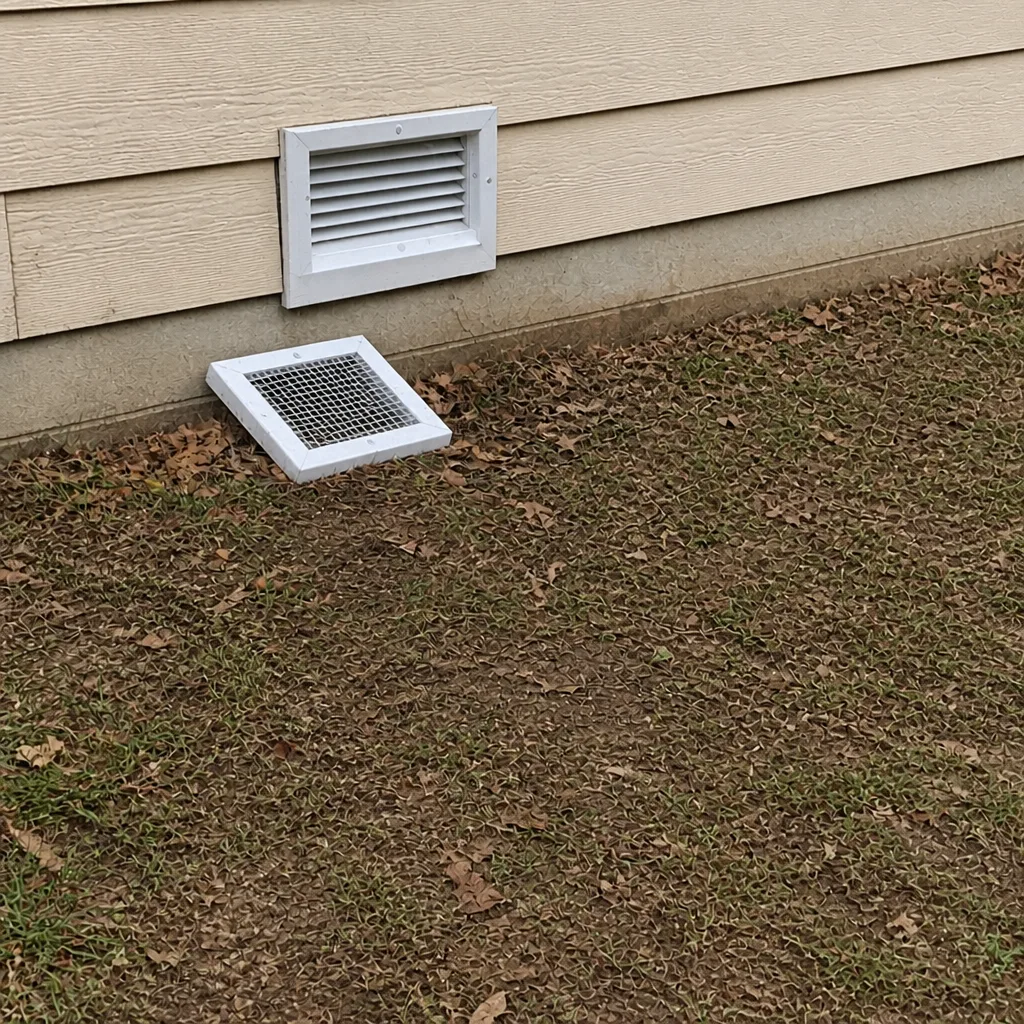 After
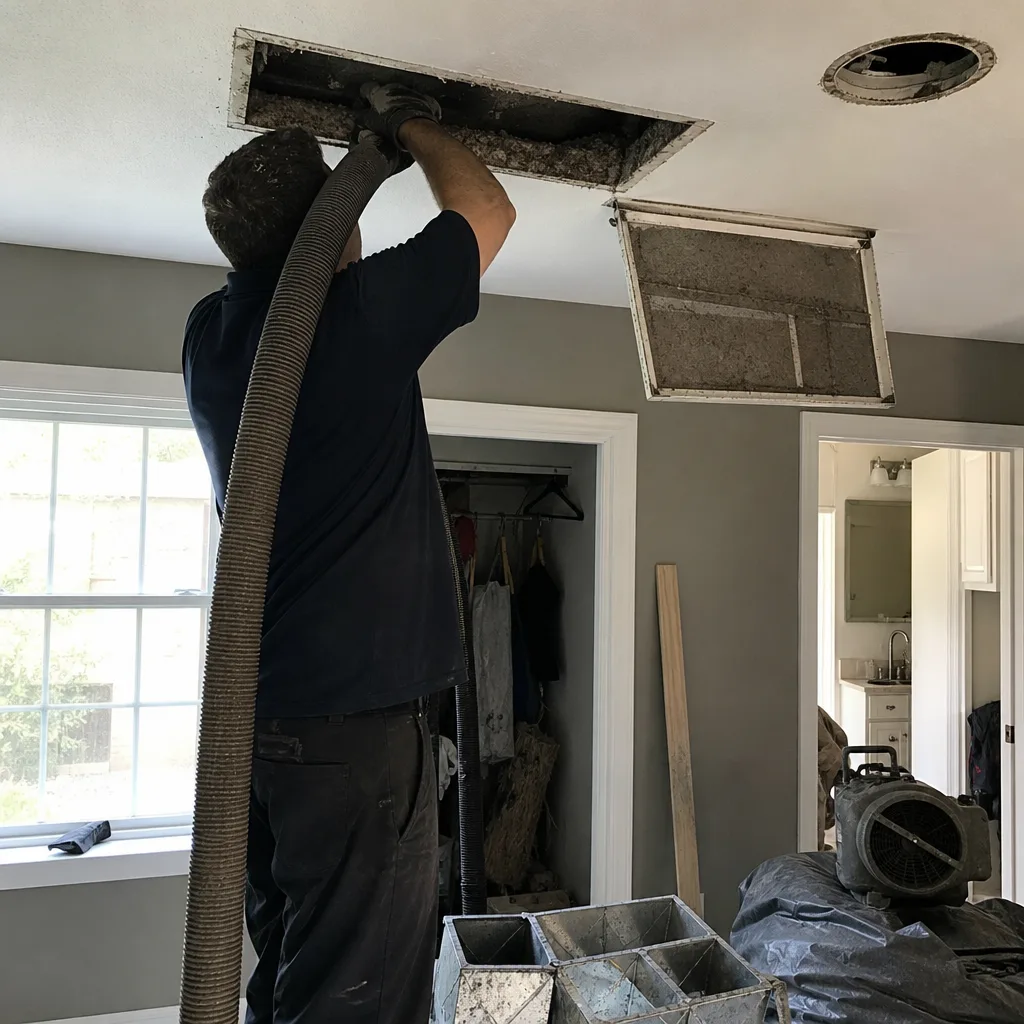 Before
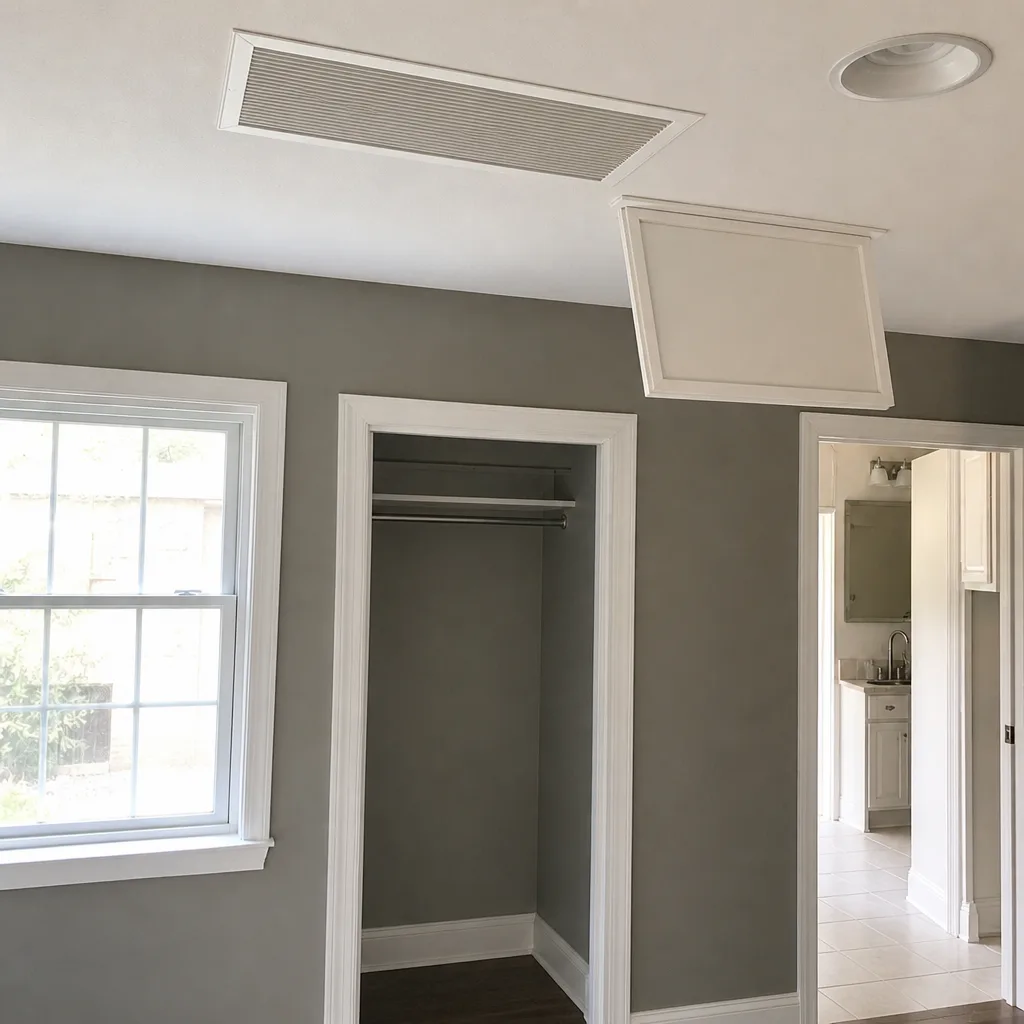 After
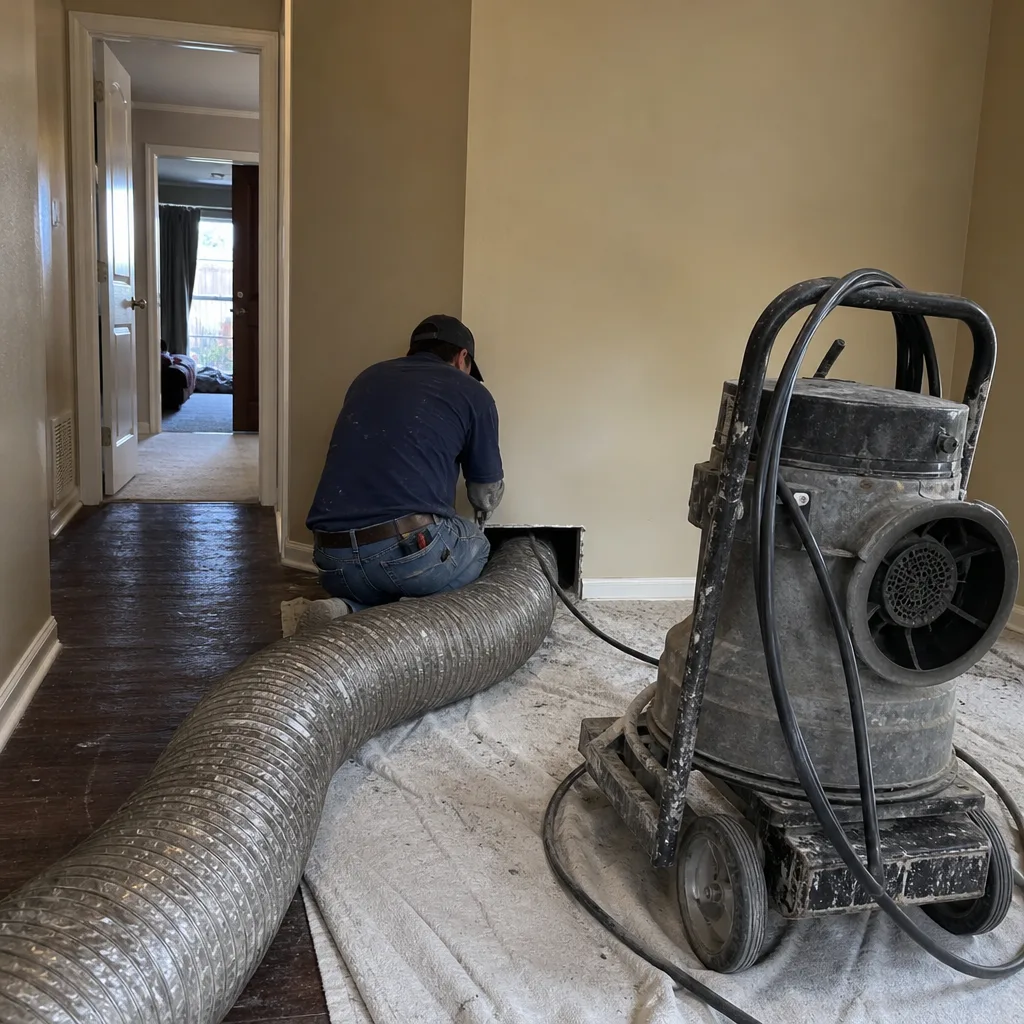 Before
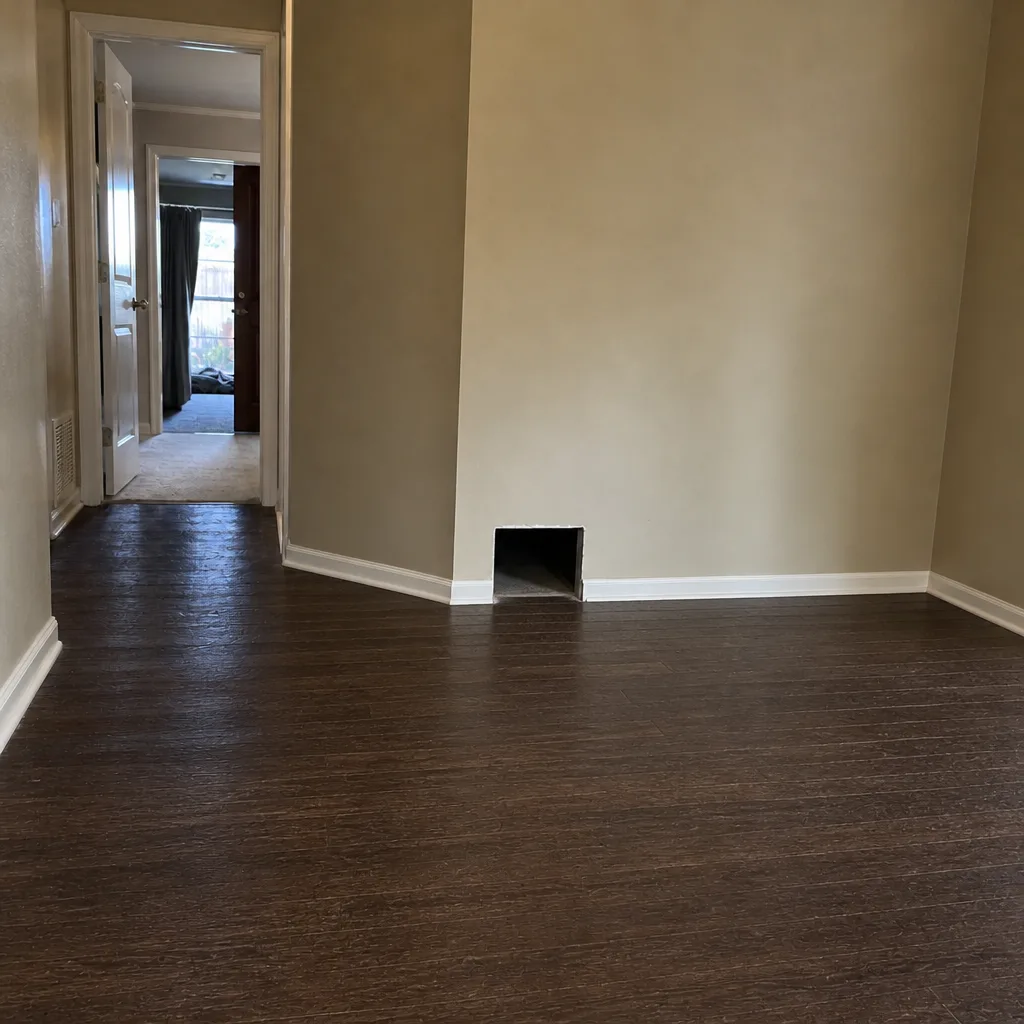 After
When to Call a Professional
Some situations call for a technician rather than a wait-and-see. Visible dust puffing from the registers when the system starts, persistent musty odors in multiple rooms, or a recent renovation that released construction dust into the return system all warrant a professional inspection. So does a homeowner with a family member who has allergies or asthma and has noticed symptoms that worsen indoors. Uneven cooling across rooms, a system that runs continuously without bringing the house to setpoint, or visible sagging flex duct in the attic are also signs to have the system looked at. Anyone who has never had the ducts inspected, especially in a Tyler home older than a decade, should get an inspection as a baseline.
Duct Cleaning Tyler offers free estimates in Tyler. Call (877) 610-4987. We answer 24/7, and fast dispatch runs from 7am to 7pm, Sunday through Friday.
Frequently Asked Questions
The cost depends on system size, the number of supply and return runs, accessibility, and whether repair work is needed. A typical residential cleaning with full return-side coverage falls into a mid-range bracket, and repairs are quoted separately as part of the written estimate. Call (877) 610-4987 for an exact quote after inspection, free of charge.
More often than the national average. With over 230 cooling days per year and heavy pine and oak pollen loading, Tyler homes benefit from inspection every two to three years, with cleaning based on what the inspection finds rather than a strict calendar. Homes with pets, recent renovations, or allergy-sensitive occupants should lean toward the more frequent end. Call (877) 610-4987 for a baseline inspection.
Because they cover less work. Low quotes often exclude return-side cleaning, skip source agitation equipment, or price per vent to make the number look small before adding line items on site. The most reliable defense is a written estimate with a defined scope and before-and-after documentation of your own ducts, not stock photos. Call (877) 610-4987 if you want to compare against a full-scope estimate.
You get the photos and video of the interior of your own ducts before and after cleaning, taken at the same access points. Anything less leaves you guessing. Our crews provide that documentation as part of every cleaning, and we can also show you the equipment used on the job. Call (877) 610-4987 to schedule.
Cleaning removes the contamination and sanitizing addresses the surface, but the fix has to include finding the moisture source. If there’s growth in the ducts, there’s moisture somewhere in the system or the building envelope, and cleaning without addressing it is a temporary solution. A camera inspection identifies both the contamination and the moisture path. Call (877) 610-4987 for an inspection.
Yes, and it’s one of the clearest reasons to schedule the service. Drywall dust, insulation fibers, and construction debris get pulled into the return side during a renovation and settle in the system. Cleaning after the work is finished removes that material before it becomes a maintenance problem. Call (877) 610-4987 to schedule an inspection once your project is complete.
The Bottom Line
Tyler’s climate creates conditions that accelerate duct contamination at a pace that generic advice doesn’t account for. More than 230 cooling days a year, heavy pollen loading, and year-round humidity mean the return side of your system is working harder than it would be in a drier or cooler region. A real cleaning uses professional-grade equipment, follows a defined inspection, includes the return side, documents the result, and assesses duct integrity while the system is open. Anything less is a partial job. Our technicians have up to 14 years of experience with systems across Tyler using Honeywell and Aprilaire air quality components, and we scope the system before we touch it. Our contact line is Tyler‘s direct connection to a full-scope duct service that also repairs what it finds.
If you’ve been told your ducts need cleaning or you suspect they do, get an estimate from someone who can actually inspect and repair the system. Call (877) 610-4987 for a free estimate. We answer 24/7. Fast dispatch from 7am to 7pm, Sunday through Friday. Learn more about our air duct cleaning and the three-service scope that keeps cleaning, repair, and dryer vent work under one roof.
Written by the team at Duct Cleaning Tyler.