
Last updated November 15, 2026
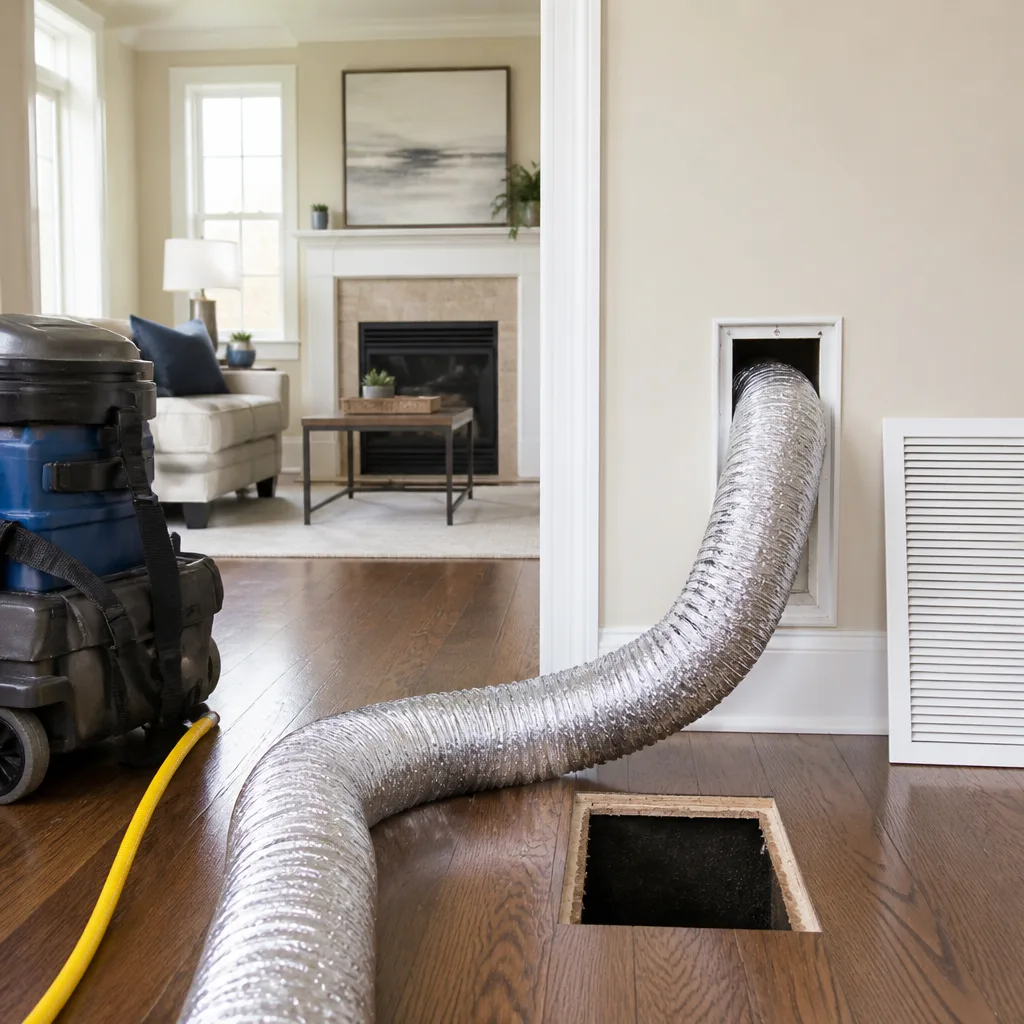 Whole-home duct cleaning
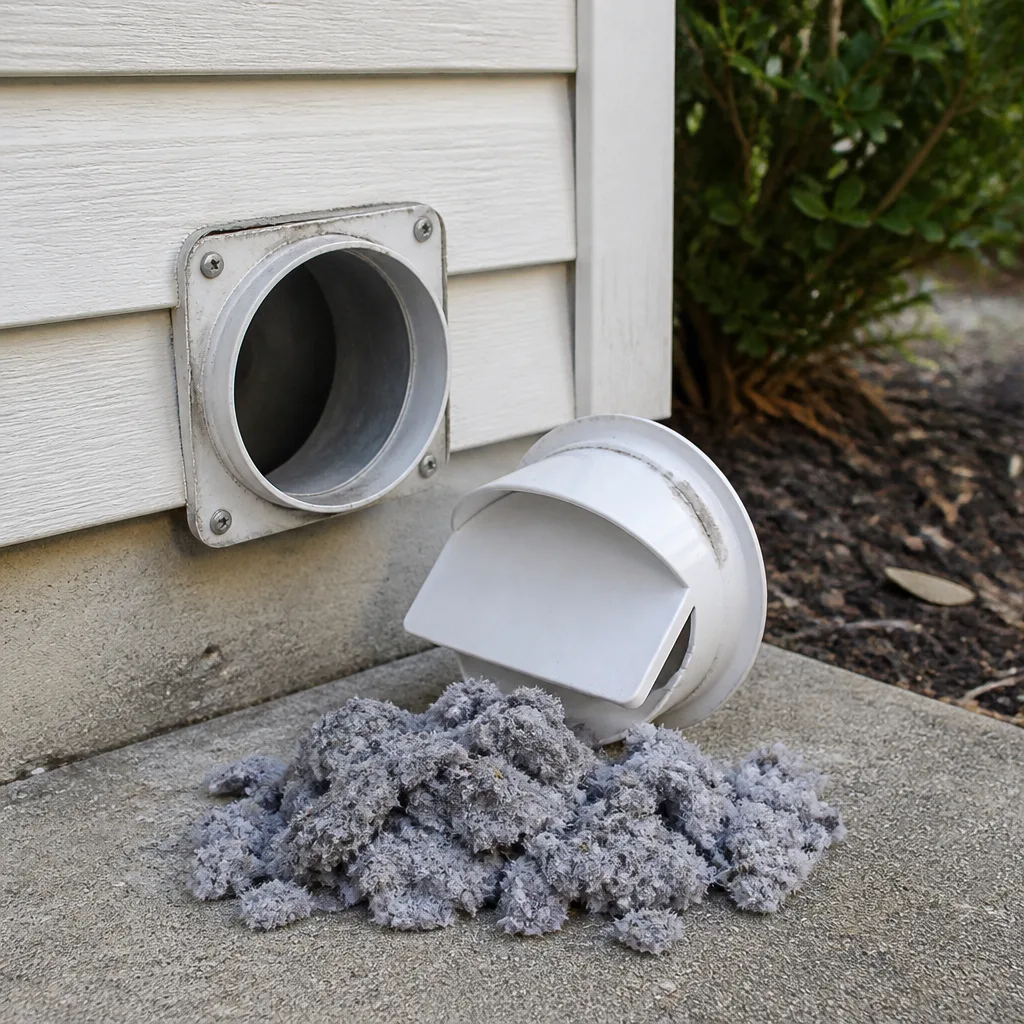 Dryer vent cleaning
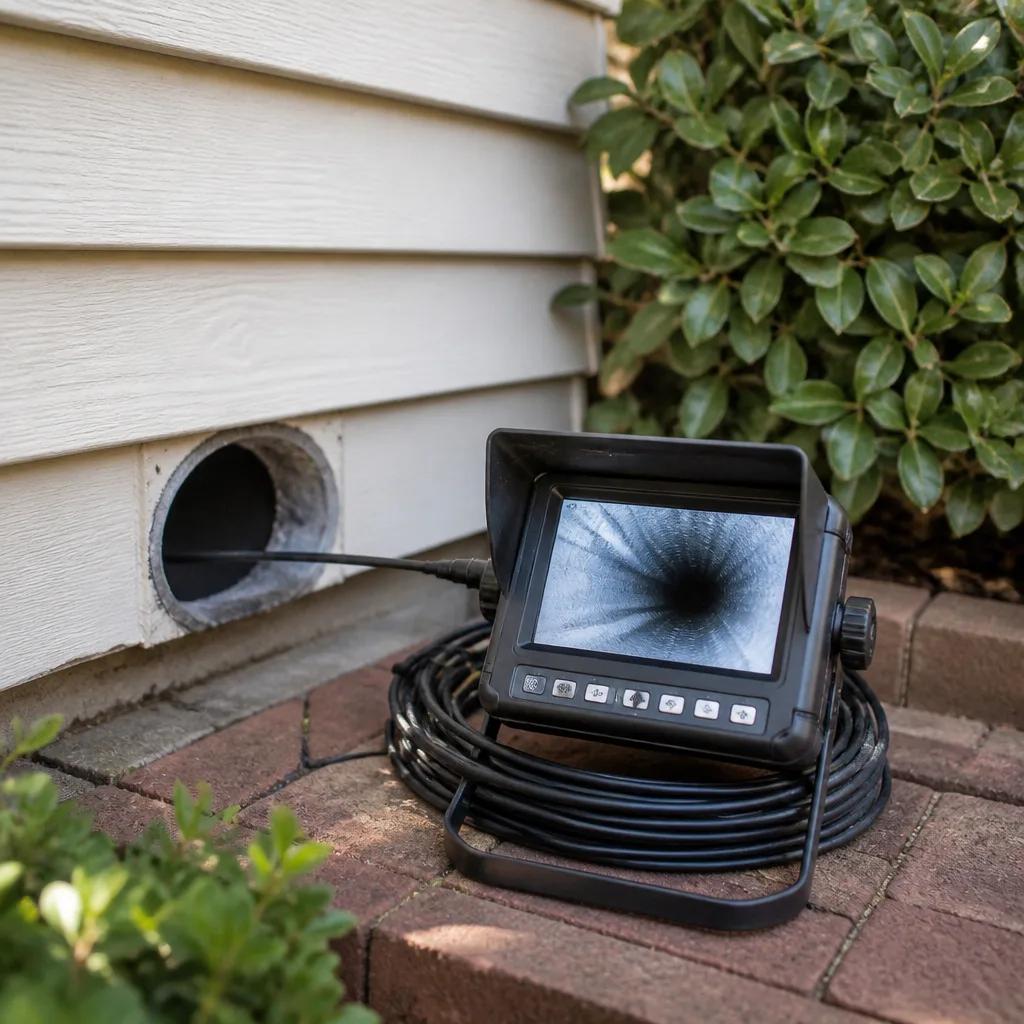 Camera inspection
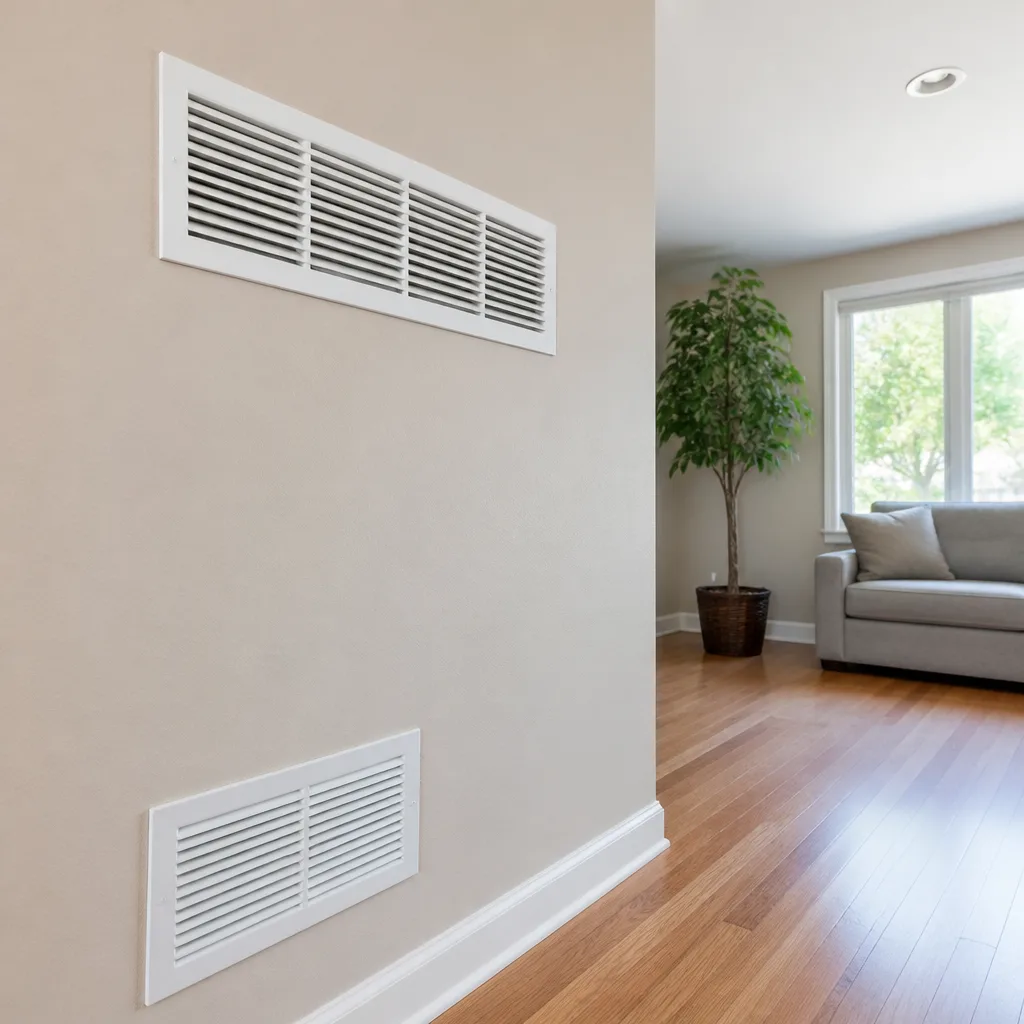 Sanitizing & deodorizing
Whole-system duct and dryer vent check with before-and-after photos - you see exactly what came out of your vents
That "$99 whole-house special" is a bait ad - the real number appears once they are in your hallway, or the "clean" is a shop-vac at the register. We photograph the inside of your ducts before and after instead.
DIY vs Professional Air Duct Cleaning: The Tyler Homeowner’s Decision Guide
Most homeowners who consider cleaning their own ducts are thinking about the wrong problem. It’s rarely a question of effort or how hard you scrub. It’s a question of physics: can your equipment pull airborne debris out of the duct system and hold it there, or does the attempt simply knock settled dust back into the air your family breathes? A consumer-grade shop vac generates roughly 1 to 2 inches of water column of negative pressure. Professional duct cleaning rigs generate 8 to 12 inches. That gap is the difference between moving dust around and actually extracting it from duct surfaces. This guide draws a clear, technically grounded line between what DIY can accomplish in a Tyler home and where the job tips into territory only professional equipment should handle.
Quick Answer
DIY air duct cleaning is appropriate for light surface work: cleaning supply registers, washing return grilles, and vacuuming out an accessible return box. Anything beyond that – source removal inside the duct runs, contaminated systems, insulated flex duct, or debris left after a renovation – needs professional negative-pressure equipment and containment. In Tyler’s humid climate, a system with visible dust buildup or any sign of moisture is a professional job, not a weekend project. A shop vac can’t generate the pressure needed to extract debris from duct interiors, and trying anyway often redistributes contamination into the living space.
Styles & brands we work with
- Whole-home duct cleaning
- Dryer vent cleaning
- Camera inspection
- Sanitizing & deodorizing
Table of Contents
- The Physics of Source Removal: Why Pressure Matters More Than Effort
- What DIY Legitimately Accomplishes (And How to Do It Safely)
- The Equipment Gap in Plain Numbers
- When DIY Is Genuinely Appropriate in Tyler
- When DIY Creates a Liability
- Combining DIY Maintenance With a Professional Cleaning Schedule
- How to Evaluate a Professional Duct Cleaning Quote
The Physics of Source Removal: Why Pressure Matters More Than Effort
Professional duct cleaning is a game of pressure differentials. The goal is source removal: getting the settled debris off the interior duct surfaces and into a contained collection point without letting it escape into the living space. Two variables control whether that happens. The first is negative pressure inside the duct run, which pulls debris toward the collection point instead of letting it fall. The second is containment, meaning the supply and return openings are sealed into the vacuum system while agitation tools work the duct walls from inside.
Both variables matter more than the brush or the technique. A homeowner with a good brush and real determination can agitate dust off duct surfaces. What they can’t do is sustain enough negative pressure to keep that dust moving out of the house instead of into the room. When you agitate a dirty duct without proper negative pressure, you create a dust cloud in the duct and the surrounding airflow carries it back out through the nearest open register. That’s the physics problem. You didn’t remove the contamination; you redistributed it.
Here’s what professional equipment brings to the source removal job:
- High negative pressure from a truck-mounted or high-capacity portable vacuum, sufficient to keep debris suspended and moving toward collection
- Containment sealing at every register, so the duct system becomes a closed loop rather than a leaky one
- Agitation tools – air whips, brushes, rotary heads – sized to the duct type, whether that’s rigid metal, duct board, or flexible insulated
- HEPA-grade filtration on the collection side, so what comes out of the duct stays captured
- Trained technique that sequences the work from return trunk to branch runs so nothing gets recontaminated mid-job
Most of the systems we work with in Tyler homes are rigid metal trunk lines with flex branches feeding individual rooms. Flex duct is the tricky part: the interior surface is corrugated and holds debris in the ridges, but it’s also easy to tear or crush. Forcing a homeowner-grade vacuum or a stiff brush through flex duct can damage the liner. The negative-pressure approach keeps the duct liner intact while the airflow does the work.
What DIY Legitimately Accomplishes (And How to Do It Safely)
This is where we want to be honest: DIY isn’t useless. There’s a real, valuable list of maintenance tasks a homeowner can do that reduces how often the duct system needs professional attention. What matters is staying in your lane. Here’s the legitimate DIY scope in a Tyler home, done in order:
- Turn off the HVAC system at the thermostat before you start. Any debris you dislodge while the system is running gets pulled into the air handler and blown straight into the living space.
- Remove the supply registers and return grilles. These are held in with a couple of screws or simple friction clips on most Tyler-area installs. Set the hardware in a small bowl so you don’t lose it.
- Wash the grilles and registers in the sink or a bucket. Warm water and a drop of dish soap loosen the grease and dust film. Rinse and let them dry completely before reinstallation.
- Vacuum the visible portion of the supply boots with a shop vac. Use a brush attachment, not a crevice tool held hard against the metal. You’re removing the loose stuff you can actually see, not trying to reach into the duct run.
- Vacuum the return air box and the filter slot. The return box catches a surprising amount of debris, but be gentle. Don’t force the wand past the transition into the duct trunk.
- Replace the air filter. This is the single highest-value DIY task. A clean filter keeps more debris out of the coil, the blower, and the ducts. Most Tyler homes do best with a filter change every 60 to 90 days; more often if you have pets or the house is near a construction zone.
- Reinstall everything and run the system with the thermostat set to fan only for ten minutes to clear any residual settled dust before normal operation resumes.
That’s the scope. It keeps your grilles clean, it keeps your filter fresh, and it removes the surface-level debris that accumulates fast. What it doesn’t do is clean the inside of the duct runs, and that’s the part that requires the professional setup. Our air duct cleaning work in Tyler focuses on exactly that interior source removal, so the tasks above and the professional service are complementary, not competing.
The Equipment Gap in Plain Numbers
The reason professional duct cleaning costs what it costs isn’t markup on labor. It’s the equipment required to do the job correctly. A truck-mounted negative-pressure system with a HEPA-grade collection unit runs into the tens of thousands of dollars, and that’s before you add the agitation tools, containment film, register adapters, and the handheld inspection gear needed to see what’s actually inside the duct. A quality portable rig – the kind of professional setup used when a truck can’t reach the driveway – still costs a meaningful fraction of that. None of it is consumer-grade.
That equipment cost is why you can’t buy your way to a proper duct cleaning at the hardware store. A shop vac is designed for wet pickup and surface cleaning. Its motor produces roughly 1 to 2 inches of water column of static pressure. A professional duct cleaning rig produces 8 to 12 inches. That’s the actual physics gap. The professional rig has to move air through a long, restricted duct run while holding enough pressure to lift debris off metal and put it into a collection bag. A shop vac is trying to move debris a foot or two from a surface into a hose. Different tools for different jobs.
The equipment we work with reflects that. Rotobrush and Nikro are two of the professional-grade duct cleaning systems in wide use across the trade, both built for source removal rather than surface dusting. We pair them with contamination-control products from Abatement Technologies and Guardsman because what happens to the debris once it’s collected matters as much as the extraction itself. And on the indoor air quality side, we regularly work around Honeywell and Aprilaire systems that are common in Tyler residential installs. Familiarity with that hardware matters because it changes how the duct system gets cleaned and how the return path is handled.
Here’s the practical takeaway: when a professional quote lands meaningfully above what you expected, ask what equipment the crew is bringing and whether containment is included. The price difference between a real source-removal job and a surface sweep is visible in the answer.
When DIY Is Genuinely Appropriate in Tyler
There are real scenarios where a homeowner doesn’t need to call anyone. The system is clean or nearly so, and the task is pure maintenance. Here’s when to keep the shop vac in the garage and handle it yourself:
- Regular filter changes. Quarterly at minimum, more often if you have pets. This is not a “hire a pro” task and it never will be.
- Register and grille cleaning. Surface grime on the visible grilles is cosmetic. Wash it off and don’t worry about the duct interior.
- Return air box cleaning. The return box is the wide box that feeds the air handler. It catches dust and pet hair. Vacuuming it out gently is fine and helps airflow.
- Post-move or post-cleaning touch-up. If you just moved in and the ducts were professionally cleaned before you took possession, wiping the grilles is all you need.
- Annual light inspection. Take a flashlight and look into a few supply registers. If you see clean metal with no dust film or debris on the boot transition, the system is in reasonable shape and DIY maintenance is enough for now.
One Tyler-specific note: this part of East Texas has a humid climate that keeps the HVAC running through most of the year. A system that runs more hours per year picks up more debris per year. That means the interval between professional cleanings may be shorter here than what national advice suggests. A homeowner who does all the DIY maintenance correctly may still need professional service every few years. Someone who skips the filter changes might need it sooner. The filter is the leverage point.
When DIY Creates a Liability
This is where the DIY question stops being about effort and starts being about risk. There are specific situations in a Tyler home where a homeowner attempting interior cleaning can make things worse – either by damaging the system or by spreading contamination that was already there. Call a professional for any of these:
- Visible mold inside the duct or on the register boots. Mold needs moisture, and moisture in a duct system means there’s an underlying problem – a leak, a condensate issue, or a system imbalance – that cleaning alone won’t fix. A shop vac will just aerosolize spores into the living space.
- Insulated flex duct runs. The interior liner in flex duct is fragile. Aggressive DIY brushing tears it, and a torn liner is a permanent system problem. Professional agitation is calibrated to the duct type.
- Post-renovation debris. Drywall dust, sawdust, and construction grit are heavy and abrasive. They settle deep in the duct system and can’t be reached with a surface vacuum. They also chew up the blower wheel if they stay in circulation.
- Pest intrusion. If you’ve had rodents or insects in the ductwork, professional cleaning with contamination control is the only safe option. DIY risks spreading pathogens through the house.
- Recent water damage. If the system has been through any kind of moisture event, the ducts need professional evaluation before anyone runs the system, let alone cleans it.
- Persistent airborne dust or allergy complaints. If the home feels dusty even with a fresh filter, the problem likely lives in the duct interior. Surface DIY cleaning won’t touch it.
One more point worth making here: professional cleaning alone doesn’t always solve the problem. If the contamination is coming from a damaged or disconnected duct run, the cleaning gets the debris out but the source stays. That’s why we offer Air Duct Repair as a named service and not as a callback scenario. Our technicians find and fix damaged ductwork in the same visit as the cleaning, so you don’t end up with a clean system that fills back up with debris from a cracked connection. When you call duct cleaning in Tyler, you get the whole system evaluated and serviced in one relationship.
Combining DIY Maintenance With a Professional Cleaning Schedule
The most cost-effective approach for a Tyler homeowner isn’t “all DIY” or “all professional.” It’s a hybrid schedule that uses DIY between professional intervals to stretch how long those intervals last. The honest math: the homeowner’s annual spend goes down when the DIY tasks are done consistently and the professional cleanings happen at the right moments instead of on a fixed calendar.
Here’s the sequence that works in most homes:
- Every 60 to 90 days: replace the air filter. This is the single DIY task that matters most. A clean filter keeps the blower and coil clean and slows the rate at which the duct system picks up debris.
- Every 6 months: remove, wash, and reinstall all supply registers and return grilles. Vacuum the return box. Wipe the filter slot.
- Every 12 months: do a flashlight inspection of a few supply boots and the air handler closet. If you see buildup on the boot transitions or a dust film inside the runs, that’s the signal to schedule professional cleaning.
- After any renovation, move, or water event: schedule professional cleaning and inspection. Debris events override whatever interval you were on.
- Every 3 to 5 years (shorter in a high-dust or high-pet household): full professional cleaning with source removal and containment, plus a review of any duct damage found during the job.
The reason this combination works is that DIY maintenance addresses the visible, accessible surfaces where most of the dirt accumulates, while the professional cleaning handles the interior source removal that DIY can’t. Doing the first poorly means the professional cleaning needs to happen sooner. Doing it well means the intervals stretch, and the total annual cost drops. We’d rather a homeowner call us in three years with a well-maintained system than call us every year with a neglected one. The maintenance tasks are the leverage.
One Tyler-specific angle worth knowing: the humid climate here means moisture control matters as much as dust control. A clean filter and a well-sealed return box help the system hold humidity better, which reduces the risk of biological growth during the long cooling season. If you notice musty odors when the system first comes on, that’s a signal to schedule professional evaluation rather than trying to DIY-clean the smell away.
How to Evaluate a Professional Duct Cleaning Quote
The single biggest hesitation we hear from Tyler homeowners about professional cleaning is the industry’s bait-and-switch reputation. A low headline price goes in, a much larger invoice comes out. Here’s how to read a quote before you book it:
- Ask whether the price is per system or per vent. Per-vent pricing makes it easy to quote low and land high. A written whole-system price is what you want.
- Ask what equipment the crew brings. Source removal requires high negative pressure and containment. If the answer is a shop vac, that’s not professional-grade source removal.
- Ask whether containment is included in the price. Every register should be sealed into the vacuum system during the job. That protects your home and makes the removal work.
- Ask whether they can handle repair. If the inspection turns up damaged ductwork, a clean-only contractor will hand you off. A company that also offers repair can fix what it finds in the same visit.
- Ask for before-and-after photos of the same duct runs. The photos should show the specific ductwork in your house, not stock images. That’s the clearest proof the work was actually done.
- Ask what happens if the pre-service inspection shows contamination that wasn’t in the original quote. A reputable company stops the work and re-quotes in writing before continuing, rather than springing the number at the end.
That last point matters most. The industry’s reputation problem exists because the low-bid quote often excludes the actual source-removal work, and the on-site technician has to sell the difference once the truck is at the curb. A quote from a company that runs professional equipment and does repair work as a named service is usually higher than the lowest bid, but it’s also the quote that doesn’t grow once the technician is on site. Our commitment to Tyler homeowners is one flat price per system, agreed before work starts, with before-and-after photos of your own ducts as the receipt.
While you’re evaluating the duct system, it’s worth considering the dryer vent cleaning as well. Dryer lint accumulation is one of the leading causes of residential house fires, and the same visit that cleans your duct system can assess the dryer vent line. We treat it as a standalone safety service rather than an upsell, because the risk is real and the cleaning is straightforward when the equipment is already on site.
Common Mistakes to Avoid
- Running the HVAC system while DIY cleaning. Anything you dislodge gets pulled into the air handler and blown into every room. Turn the system off at the thermostat first, and only run it on fan-only once the work is complete to clear residual dust.
- Using a shop vac on duct interiors. The 1 to 2 inches of water column of pressure a consumer vacuum generates isn’t enough to extract debris from duct runs. What it does accomplish is stirring dust into the air. Stick to the surface tasks.
- Assuming “cleaning” fixes contamination caused by damaged ductwork. If a duct run is disconnected, crushed, or leaking, cleaning the ducts just gives the contamination a clear path back in. Repair has to be part of the conversation.
- Judging a quote by the headline price alone. The lowest bid in Tyler is often per-vent pricing that inflates once the technician is on site. A whole-system price agreed in writing is what you want to compare.
- Skipping the filter change between professional cleanings. A clogged filter means the blower is pulling dirt past the filter into the coil and the ductwork. Changing the filter is the single highest-leverage maintenance task in the whole system.
- Ignoring musty odors. In Tyler’s humid climate, a musty smell when the system starts up often signals moisture in the ductwork. That’s a professional evaluation scenario, not a DIY cleaning scenario.
- Assuming dryer vent cleaning is optional. Lint accumulation in the dryer vent line is a fire hazard, not a cosmetic issue. It needs to be cleaned on its own schedule, separate from the duct system’s schedule.
See the difference
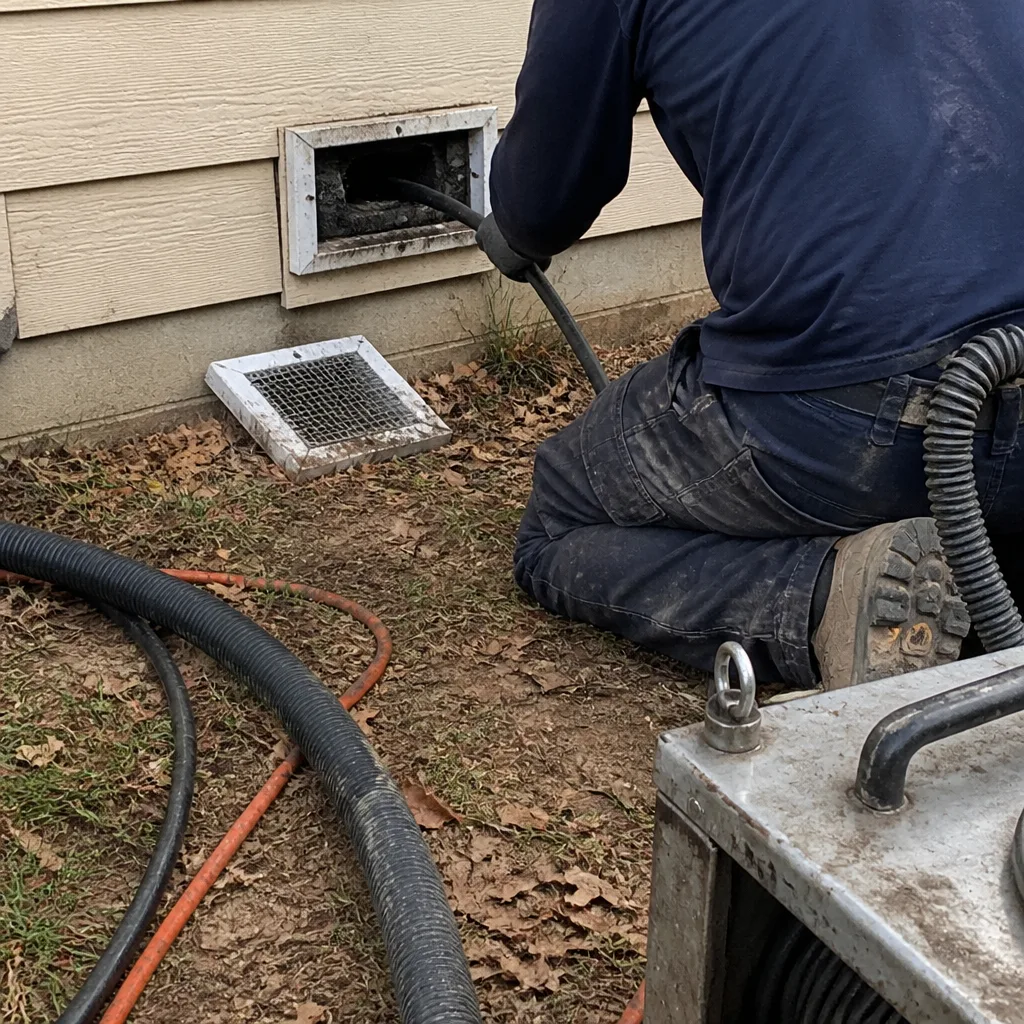 Before
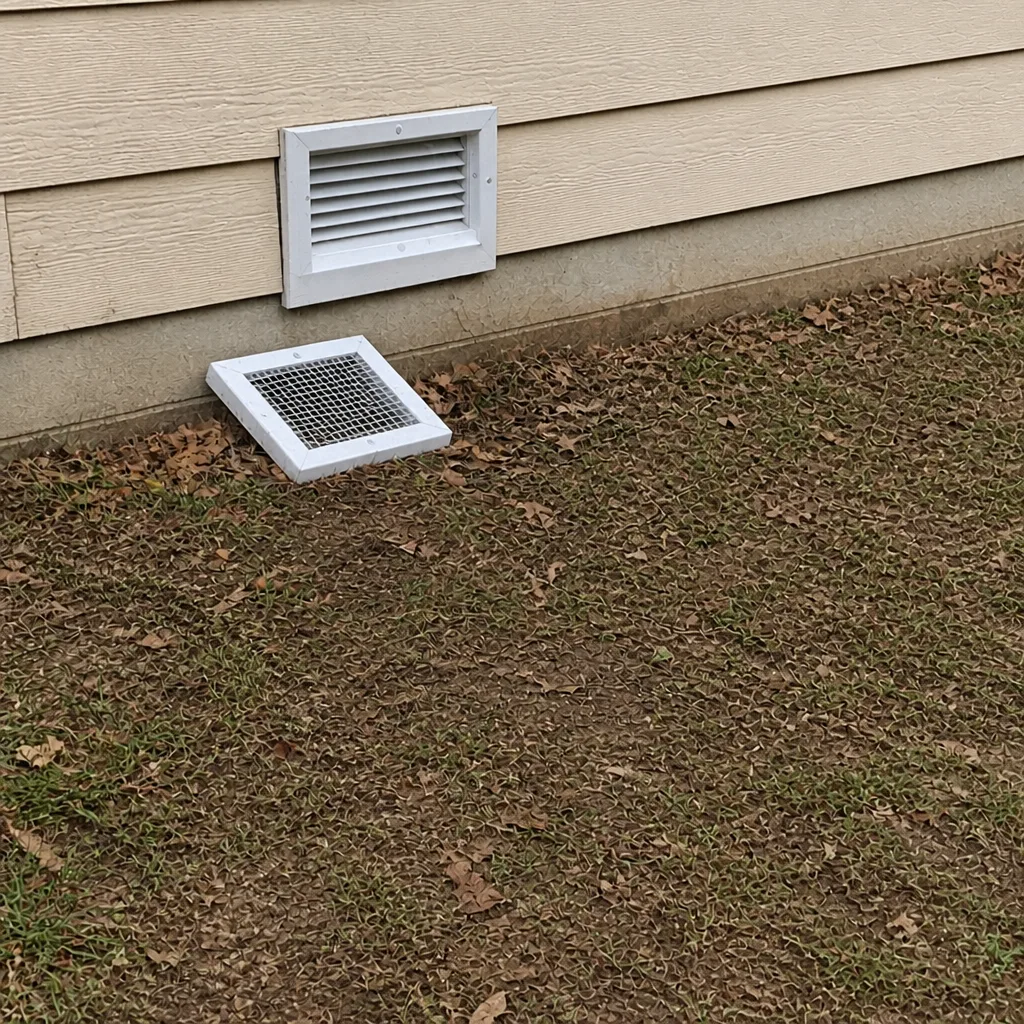 After
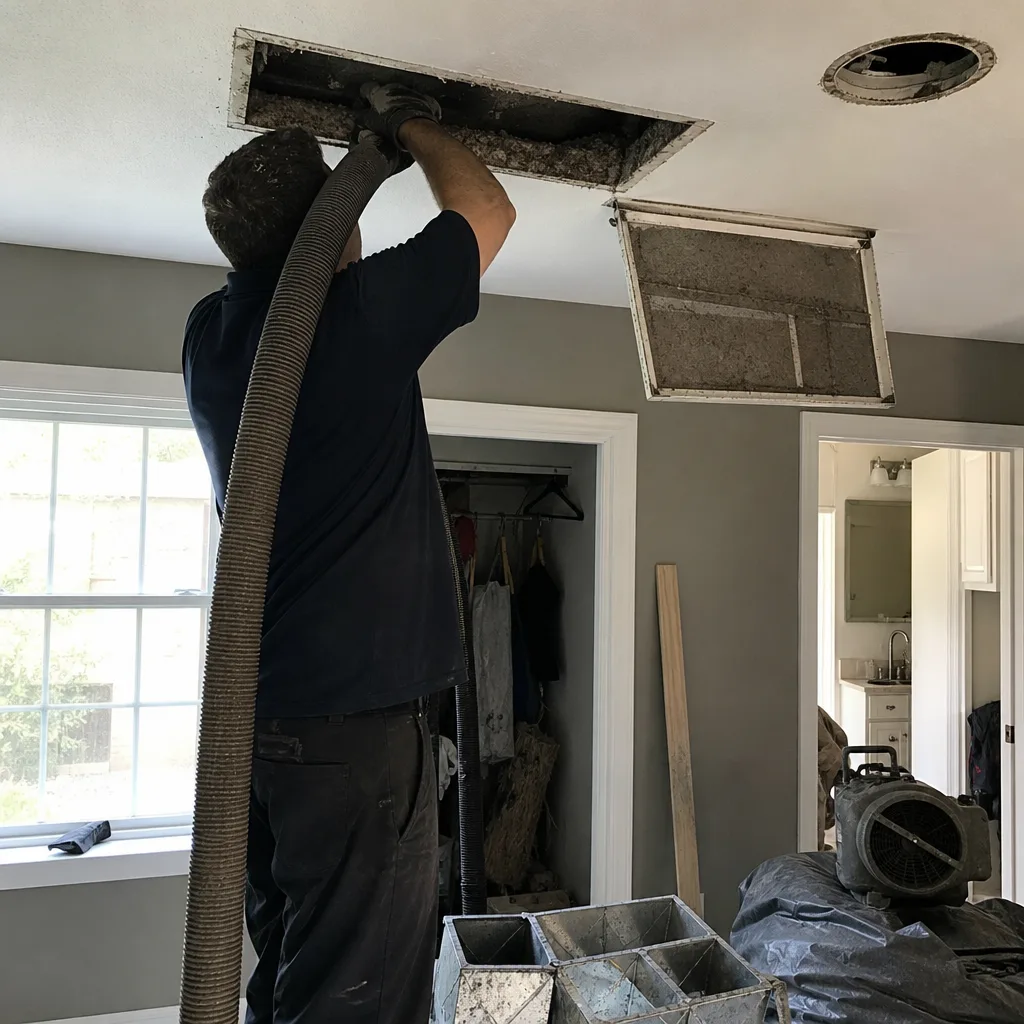 Before
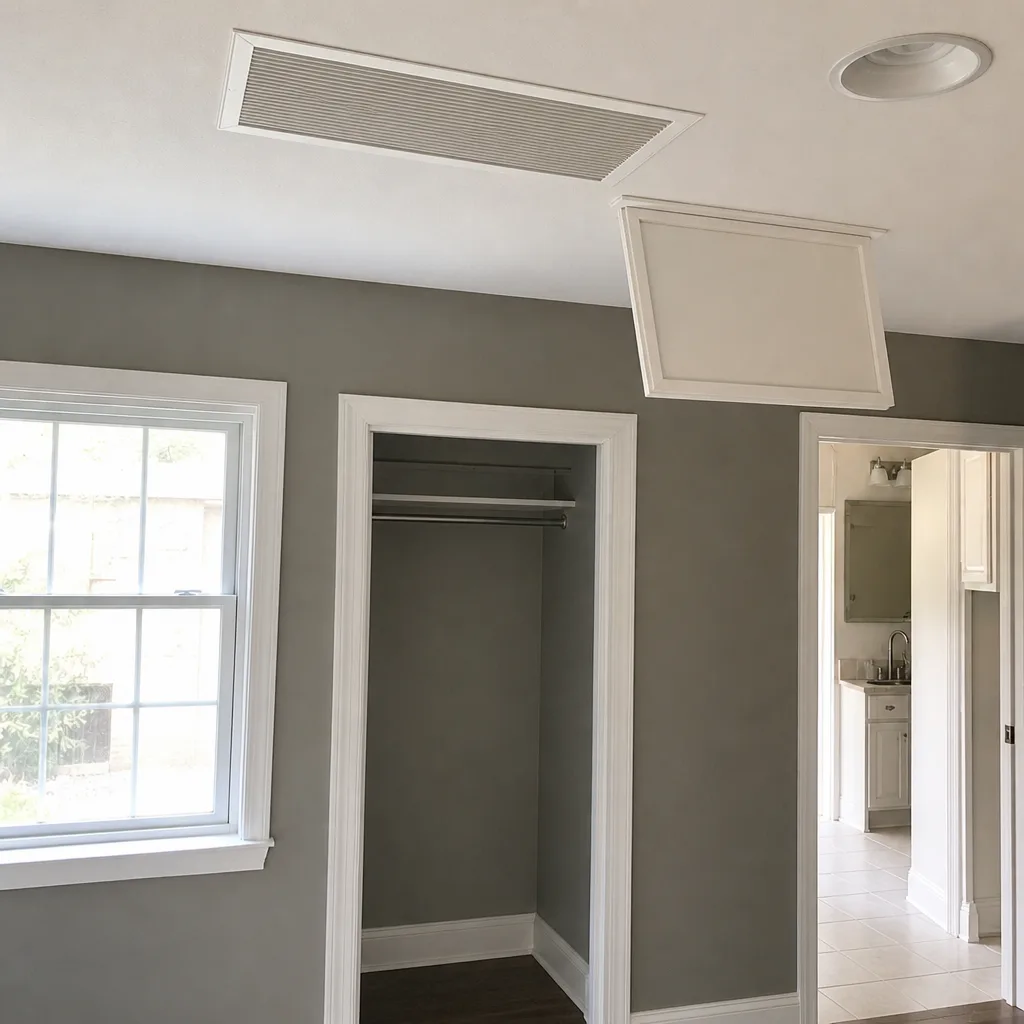 After
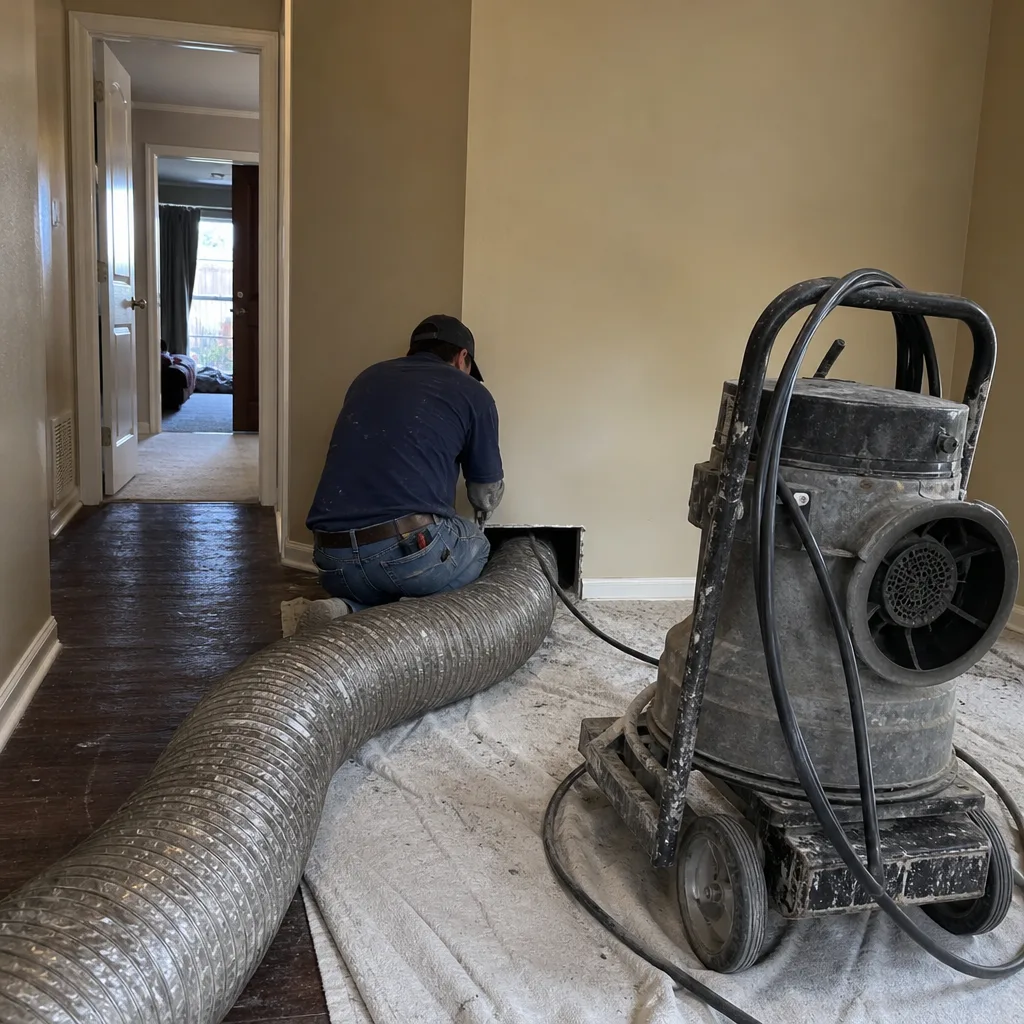 Before
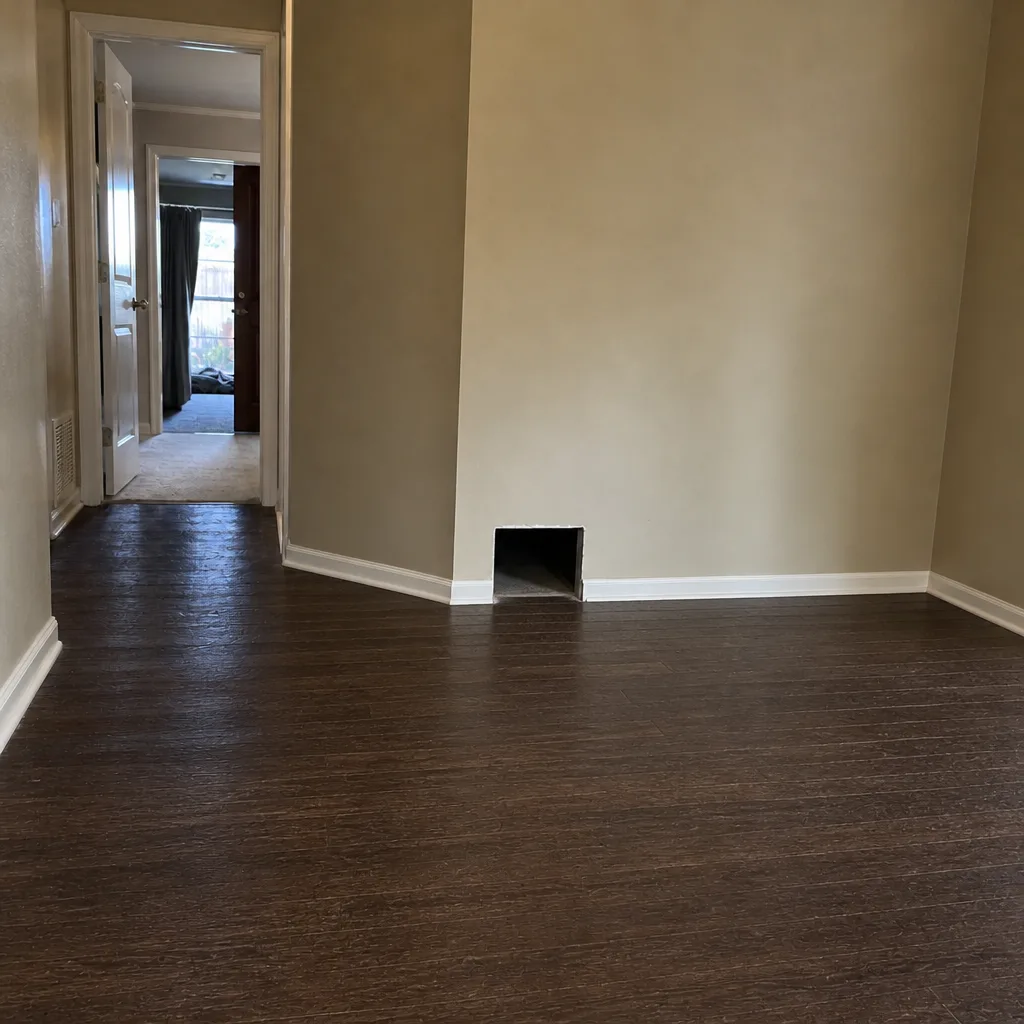 After
When to Call a Professional
If the duct system has visible mold, insulated flex runs that need agitation inside, post-renovation debris, pest contamination, or a persistent dust problem that a fresh filter didn’t fix, the DIY question is settled: it needs professional equipment and containment. If the ductwork is damaged or disconnected, it needs the cleaning and the repair handled together so the fixed system doesn’t refill with debris. And if you’re evaluating a quote from any provider, ask whether the price is per system or per vent, what equipment is on the truck, and whether repair is in scope. Duct Cleaning Tyler offers free estimates in Tyler – call (877) 610-4987. We answer 24/7. Fast dispatch from 7am to 7pm, Sunday through Friday.
Frequently Asked Questions
For a whole-house system in Tyler, professional cleaning typically lands in a range driven by the number of runs, the duct type, and how much contamination the pre-service inspection finds. We don’t price per vent, because per-vent pricing is the gateway to a lower quote that grows on site. Every estimate is per system, agreed in writing before work starts, so the final invoice matches what you signed. Call (877) 610-4987 for an exact quote – estimates are free.
You can clean the visible parts – the supply registers, the return grilles, the return box, and the filter slot – but you can’t clean the duct interiors with a shop vac. A consumer-grade vacuum generates roughly 1 to 2 inches of water column of negative pressure; professional duct cleaning rigs generate 8 to 12 inches. The pressure gap is what makes source removal work. Attempting interior cleaning with a shop vac usually distributes debris into the living space rather than extracting it. Call (877) 610-4987 to book a proper source-removal cleaning.
Lower quotes usually reflect a different scope: per-vent pricing that inflates on site, no containment during the job, or a single surface sweep rather than interior source removal. The equipment cost for real source removal – the truck-mount or high-capacity portable vacuum, the containment film, the agitation tools, the inspection gear – is a meaningful investment, and a company that carries it has to charge enough to cover it. The way to compare quotes fairly is to ask whether the price is per system or per vent, what equipment the crew brings, and whether containment and repair are in scope. Call (877) 610-4987 for our written whole-system estimate.
Ask for before-and-after photos of the specific duct runs in your house. Stock photos of “cleaned” ducts don’t prove anything about your system. The photos should show the same register and the same duct interior at the start and end of the job, and you should be able to recognize the ductwork. That’s the clearest form of receipt. We provide before-and-after photos as a standard part of the service – call (877) 610-4987 to schedule.
For a well-maintained Tyler home with regular filter changes and no pets or renovations, professional cleaning every three to five years is usually enough. Shorter intervals make sense with multiple pets, a renovation, a water event, or persistent dust complaints. The humid climate means the system runs most of the year, which increases debris pickup. The best signal is a flashlight inspection of a few supply boots: if you see dust film or boot-transition buildup, it’s time. Call (877) 610-4987 for a free estimate.
Not necessarily, but the two are worth considering together because the same visit can assess both lines. Dryer vent cleaning is a fire-safety service, not an air quality one: lint accumulation in the dryer vent line is a leading cause of residential house fires. If it’s been a while since the vent line was cleaned, or if the dryer is taking longer to dry loads, it’s worth booking. Call (877) 610-4987 to check both in one free estimate.
They can fix the damaged section during the same visit. That’s why we offer Air Duct Repair as a named service rather than a referral: a disconnected, crushed, or leaking duct run means the cleaning just gives the contamination a return path. Finding the damage and repairing it in the same job is far better than cleaning a broken system and scheduling a follow-up for the repair. Call (877) 610-4987 if you suspect duct damage.
The Bottom Line
The DIY duct cleaning question comes down to physics, not effort. Surface maintenance – register cleaning, grille washing, return box vacuuming, and regular filter changes – is genuinely valuable and belongs in every homeowner’s routine. Interior source removal is a different job, and it requires negative pressure and containment that consumer equipment can’t generate. Know where the line is and stay on the right side of it. Our technicians have up to 14 years of experience with the professional-grade equipment and repair capability this work requires, so when the DIY scope ends, we’re ready to take over. For a free estimate, call (877) 610-4987. We answer 24/7. Fast dispatch from 7am to 7pm, Sunday through Friday. If you’re looking for the Tyler team that handles the whole duct system rather than a surface sweep, that’s what we do.
Written by the team at Duct Cleaning Tyler.